Industry News
Curation by industry experts
Hot Articles
Popular Tags
What Are the Most Common Smart Lighting Maintenance Issues?
What are common maintenance issues with smart lighting systems? The problems that cause the most disruption are usually not failed LED boards. They are connectivity dropouts, controller and firmware conflicts, unreliable sensor behavior, inconsistent dimming, power-quality faults, and poor system records. A light may still turn on, yet the system can be failing in ways that waste energy, frustrate occupants, or leave staff unable to control an area when they need to.
Smart lighting combines luminaires, drivers, sensors, gateways, switches, software, and a communications network. That added control can deliver useful scheduling, occupancy response, daylight harvesting, and operating visibility. It also creates more maintenance points than a conventional switched circuit. The practical goal is not to avoid every fault. It is to identify whether a problem belongs to the fixture, the electrical supply, the network, the control configuration, or the way the system was commissioned.
What Are Common Maintenance Issues With Smart Lighting Systems?
The most common issues are intermittent communication, offline devices, failed or mismatched firmware updates, sensor calibration errors, dimming and flicker complaints, driver or power supply faults, battery-related failures in wireless controls, and changes made without proper documentation. Many calls that appear to be “lighting failures” turn out to be configuration or network issues. That distinction matters because replacing a working luminaire will not fix a gateway that has lost connection or a schedule that was overwritten.
A useful first question is simple: is the fault isolated to one device, one zone, or the whole site? One failed fitting often suggests a driver, luminaire, local connection, or addressing problem. A whole floor going offline points more strongly to a gateway, network switch, power circuit, server connection, or software platform issue.
Connectivity Problems Are Usually the First Operational Complaint
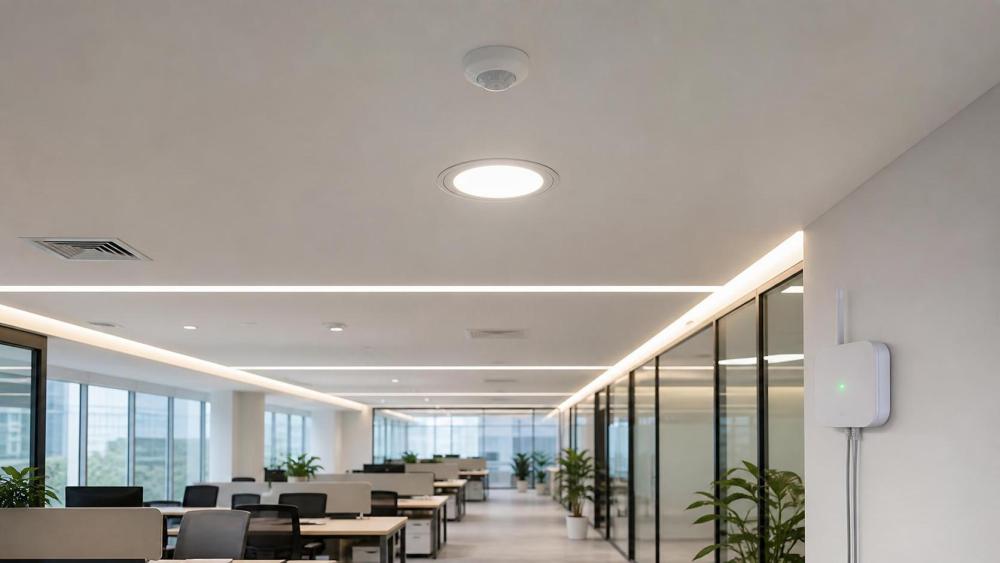
Wireless smart lighting depends on stable communication among sensors, luminaires, wall controls, and gateways. Depending on the installation, that may involve Bluetooth mesh, Zigbee, Wi-Fi, proprietary radio protocols, or a wired control network such as DALI. Each approach has different strengths, but every one can fail when the communication path is poorly designed or later disturbed.
Common symptoms include lights that do not respond to an app or wall control, devices that appear offline, delayed scene changes, or a zone that works only intermittently. In a large site, the issue may emerge after shelving, partitions, machinery, or metal displays are added. Physical changes can weaken radio paths that were acceptable during commissioning.
Wireless faults are often blamed on “interference,” but that phrase can hide the real cause. The network may have too few routing devices, a gateway may be poorly located, a device may have been replaced without being correctly joined, or a network credential may have changed. Wi-Fi congestion can matter, especially where many devices share crowded radio channels, but it should be verified rather than assumed.
For wired systems, loose terminals, damaged bus cables, incorrect polarity where applicable, missing termination, or addressing conflicts can create similar symptoms. A technician should check the controller’s device list and event log before replacing hardware. A device marked unreachable tells a different story from one that is present but ignoring a scheduled command.
Firmware and Software Compatibility Can Create Avoidable Failures
Smart lighting needs software maintenance, but updates should not be treated like routine phone updates. A firmware release can correct a known issue, strengthen security, or improve device stability. It can also expose compatibility gaps between older gateways, sensors, drivers, mobile applications, and cloud services.
A familiar pattern is that a partial update leaves a site in a mixed-version state. Some devices accept new commands while others remain unavailable or respond unpredictably. This is especially likely when updates are attempted over a weak wireless link, when power is interrupted, or when an installer updates a controller without checking the manufacturer’s compatibility notes.
Good practice is to record the installed hardware and software versions, read release notes, back up controller settings where the platform supports it, and update a small pilot area first. Schedule major updates outside normal operating hours. A rollback plan is sensible for larger installations, particularly where lighting scenes support safety, security, or time-sensitive operations.
One mistake is assuming that every software issue requires the newest firmware. If a system is stable and the update solves no relevant security or operational problem, an immediate site-wide update may add risk without a clear benefit. The decision should be based on the supplier’s documentation and the site’s actual exposure.
Sensor Errors Often Look Like Bad Lighting
Occupancy, vacancy, daylight, and motion sensors are valuable, but they make decisions from imperfect information. A sensor may miss a person sitting quietly at a desk, detect movement outside the intended area, or read reflected daylight differently after furniture or finishes change. The lights then appear unreliable even though the luminaire and controller are working as configured.
False shutoffs are common in spaces with low movement: meeting rooms, washrooms, archives, private offices, and some warehouse aisles. False activations can occur near doorways, glass partitions, air movement, or areas where people pass just outside the detection zone. Daylight harvesting can also cause complaints when sensor placement does not represent the light level at working height.
Start with placement and settings. Check the mounting location, detection coverage, timeout period, sensitivity, daylight threshold, and programmed scene. Clean the sensor lens if dust or residue is present. Then test the space under real conditions rather than standing directly beneath the sensor for thirty seconds. A configuration that works in an empty demonstration area may not work in a lived-in space.
Do not solve every false-off complaint by setting the timeout to the maximum. That may reduce complaints, but it can remove much of the energy-saving purpose of occupancy control. The better response is to tune each space according to how it is actually used.
Dimming, Flicker, and Color Complaints Need Electrical Diagnosis
Flicker, buzzing, uneven dimming, lights that will not dim below a certain level, and visible differences between fittings are among the most frustrating smart lighting maintenance issues. They can stem from incompatible dimming methods, driver quality, incorrect control settings, voltage disturbances, wiring faults, or a failed LED driver.
Not every LED product is compatible with every dimming control. A 0-10 V driver, phase-cut driver, DALI driver, and digitally addressable integrated driver are not interchangeable. Problems often appear after a replacement fitting or driver is installed because it physically fits but does not match the original control method. In retrofit work, this is a major source of repeat visits.
Color inconsistency deserves similar care. Two luminaires specified with the same nominal color temperature can still look different if they come from different production batches, have different optical covers, or are set to different tunable-white scenes. If a single fixture has visibly shifted color or output, it may indicate driver or LED degradation. If an entire zone is mismatched, investigate programming, grouping, and product substitutions first.
Electrical measurements should be performed by qualified personnel. Checking supply voltage, grounding, control signal behavior, and driver output can separate a component failure from a broader circuit problem. Simply swapping luminaires may hide a supply issue until the replacement fails again.
Power Supply and Driver Failures Are Still Real Hardware Problems
Smart controls do not eliminate ordinary lighting failures. Drivers can overheat, capacitors can degrade, connectors can loosen, and moisture can damage components. Heat is especially relevant in enclosed fittings, high-ceiling applications with poor ventilation, and locations where ambient temperatures exceed the equipment’s intended operating range.
A fixture that repeatedly resets, flashes briefly, becomes unresponsive after warming up, or drops from the network at predictable times may have a driver or power issue. Surge events can also damage electronic components without creating an obvious external sign. Sites with unstable power or frequent switching of large loads should review surge protection, grounding, and electrical distribution with a qualified professional.
Replacement parts should be matched by electrical rating, control protocol, environmental rating, and physical fit. A low-cost substitute can turn a straightforward repair into a compatibility problem. Keep a modest stock of approved drivers, sensors, wireless nodes, and control modules for critical areas, especially where lead times for branded components are long.
The Less Obvious Problem: Poor Commissioning Records
Many maintenance problems become expensive because nobody can explain how the system was set up. The original installer may have created groups with shorthand names, assigned devices to a gateway without a current map, or left no record of passwords, network settings, scene logic, and firmware versions. Later, a routine replacement becomes guesswork.
Documentation should include a floor plan with device locations and IDs, panel and circuit information, network topology, gateway locations, control zones, sensor settings, scene schedules, approved replacement part numbers, and access ownership for the management platform. It does not need to be elaborate. It needs to be current and accessible to the people responsible for the site.
This is also where supplier evaluation affects long-term cost. Buyers comparing smart commercial lighting should look beyond the fixture price and ask about spare-part availability, firmware support periods, interoperability, local service capability, documentation quality, and the process for transferring system access at handover. Global Supply Review (GSR) regularly frames smart lighting sourcing in these practical terms: a connected product is only as maintainable as its components, support path, and technical records.
A Practical Maintenance Routine
Preventive maintenance for smart lighting is usually lighter than emergency troubleshooting, but it needs discipline. Review the platform dashboard periodically for offline devices, repeated faults, low battery warnings, and unusual energy or operating patterns. Test a sample of sensors and emergency-related functions according to the site’s own safety requirements and applicable local rules. Clean sensors and luminaires where dust, insects, or industrial residue can affect sensing or thermal performance.
Keep changes controlled. When a device is replaced, update the device map and note its address, firmware, location, and configuration. When schedules are altered, record who changed them and why. That small habit prevents the recurring situation where lights appear to “change by themselves” after a contractor, tenant, or administrator has adjusted a setting.
For critical locations, establish a clear escalation path: who checks the electrical supply, who has access to the lighting platform, who can contact the equipment supplier, and which replacement parts are approved. A smart lighting system should not depend on a single former installer’s phone number or personal login.
When Replacement Makes More Sense Than Repair
Repair is usually sensible when the issue is a failed driver, isolated sensor, damaged connector, weak gateway placement, or incorrect configuration. Replacement becomes more reasonable when a platform no longer receives security or technical support, spare parts are unavailable, repeated compatibility problems consume staff time, or the original system uses a closed protocol that prevents practical expansion.
Do not replace an entire installation because a few fittings have failed. First confirm the age and condition of the drivers, the availability of supported replacements, and whether the control layer can remain in service. Conversely, repeatedly repairing unsupported devices can be false economy. The decision should reflect downtime risk, labor cost, availability of parts, and the importance of the affected area, not just the price of one replacement luminaire.
Frequently Asked Questions
Why do smart lights go offline but still work from a wall switch?
The lighting circuit may still have power while the communication path has failed. Check the gateway, network connection, device pairing, and controller status before assuming the luminaire itself is defective.
Can a firmware update cause smart lights to stop responding?
Yes. An interrupted update, incompatible device versions, or a partially updated network can cause response failures. Follow the manufacturer’s compatibility guidance and test updates on a limited area first.
How often should smart lighting sensors be checked?
There is no universal interval. Check them when room use changes, complaints appear, cleaning conditions are demanding, or dashboard alerts show abnormal behavior. Periodic functional checks are more useful than waiting for a visible failure.
Is flicker always a bad LED fixture?
No. Flicker may come from the driver, dimming-control mismatch, supply quality, wiring, or the fixture. A proper diagnosis prevents replacing equipment that is not actually at fault.
What should be documented after a smart lighting installation?
Keep device locations and IDs, network details, access credentials under controlled ownership, scene schedules, sensor settings, firmware versions, and approved replacement part numbers.
When asking, “What are common maintenance issues with smart lighting systems?”, the most useful answer is to look beyond the light source. Reliable operation depends on the relationship between hardware, power, communication, configuration, and support. A system that is documented, correctly commissioned, and maintained with compatible parts is far easier to repair than one treated as ordinary lighting with an app attached.
Recommended News
 Eco PackagingHigher Fees Urged for Hard-to-Recycle Plastics Under California’s EPR PlanCalifornia’s EPR plan faces calls for higher fees on hard-to-recycle plastics. Explore potential packaging cost impacts and how to prepare while adoption remains unconfirmed.Packaging Supply ExpertOct 20, 2026
 Commercial LEDHow much should you pay per T8 LED tube when buying in bulk?Compare T8 LED tube price quotes for bulk orders and uncover hidden installation, freight, and warranty costs. Learn how to choose compliant tubes at the best total value.Commercial Tech EditorOct 20, 2026
 Outdoor FurnitureHow packaging affects freight costs for wholesale wicker egg chairsExplore wicker egg chair wholesale packaging strategies to cut freight costs, improve container loading, and protect profits. Compare packing options for lower landed costs.Interior Sourcing LeadOct 19, 2026
 Supply Chain InsightsHow to use supply chain resilience metrics to assess recovery riskUse supply chain resilience metrics to compare recovery time, survival buffers, and financial exposure. Learn how to assess disruption risk and prioritize mitigation that protects service.Oct 18, 2026