Industry News
Curation by industry experts
Hot Articles
Popular Tags
What Are the Main Risks of Sourcing Garments from Small Factories?
What Are the Main Risks of Sourcing Garments from Small Factories?
What are the main risks of sourcing garment manufacturing from small factories? For apparel buyers, the concerns are inconsistent bulk quality, overstated capacity, delivery delays, weak financial reserves, and gaps in labor compliance or material traceability. Competitive prices and flexible minimum order quantities can make these weaknesses easy to overlook—especially when the samples look excellent.
Yet factory size alone is a poor measure of reliability. A small workshop specializing in woven shirts may be a better partner than a larger plant taking on unfamiliar construction. The real question is whether the supplier has the people, processes, and financial capacity to deliver your particular order. This Global Supply Review guide examines where that assessment most often goes wrong and what buyers should verify before committing production.
A good sample does not prove bulk-production capability
Samples are often made by a factory’s most experienced machinist, with close supervision and time to correct mistakes. Bulk garments go through a production line, where operators work at different speeds and repetitive defects can spread before anyone stops the process.
Consider a stretch-knit top. The sample may fit correctly, but bulk production can introduce seam puckering, distorted necklines, or inconsistent measurements if machine settings and fabric handling are not controlled. Washing can expose further problems, including shrinkage, twisting, or differences between fabric lots. A visual inspection of an unwashed sample will not settle those questions.
Before approval, establish a usable technical pack: measurement points, tolerances, construction details, fabric specifications, trims, labeling, and packing requirements. Keep an agreed reference sample, but do not expect it to replace written specifications. “Same as sample” leaves too much open to interpretation when a dispute concerns fit or workmanship.
Ask who checks the first pieces off the line and how defects trigger corrective action. Final random inspection can support an acceptance decision, but sampling does not guarantee every garment is defect-free. For unfamiliar styles, early inline inspection is often more useful than discovering a recurring fault after everything has been packed.
Capacity promises can conceal the real bottleneck
A machine count is not a production plan. Usable capacity depends on operator skills, style complexity, line balancing, absenteeism, and orders already booked. It also depends on whether specialist operations—such as buttonholing, bonding, embroidery, or garment washing—are available when needed.
A factory may have room to sew your order but no confirmed slot at its washing subcontractor. Alternatively, an order with many colors and sizes may require more changeovers and handling than its total quantity suggests. Asking only for “monthly capacity” misses both problems.
Request a schedule tied to your style, with milestones for material arrival, cutting, sewing, outside processing, inspection, and packing. Ask what happens if another customer’s order runs late. A credible supplier can explain the constraint; an unrealistic one simply repeats the shipment date.
The danger is not just delay. An overloaded factory may quietly move work elsewhere. That changes the production location, quality controls, and potentially the compliance conditions you originally assessed.
Map subcontracting rather than banning it blindly
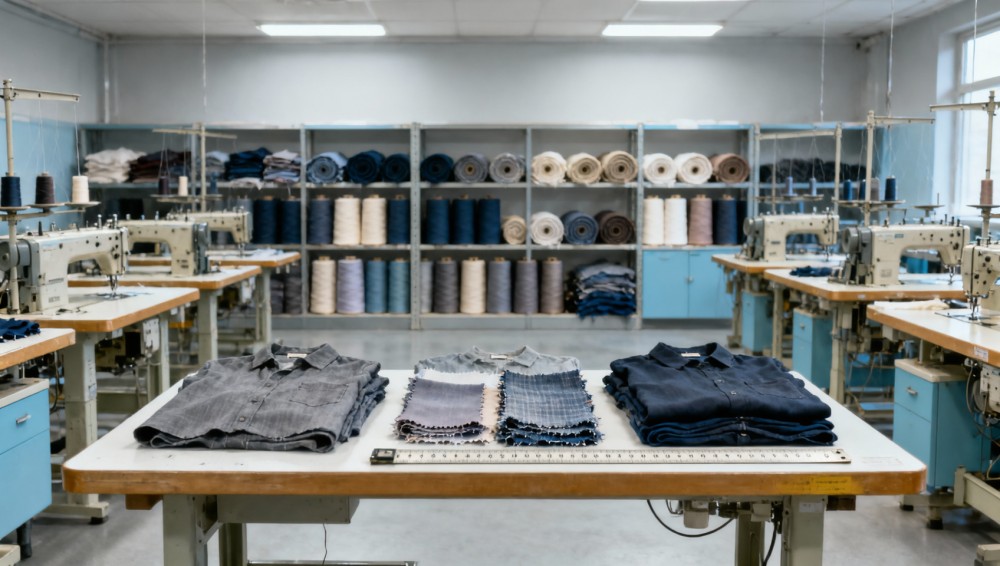
Specialist subcontracting is normal in apparel. The issue is undisclosed or uncontrolled subcontracting, not the mere involvement of another business. Document which processes happen outside the main factory, where they take place, and who is responsible for checking them. Require prior approval for production-site changes and make access for verification part of the agreement.
Cash-flow weakness can become your delivery problem
Smaller manufacturers may have limited working capital. They often need to pay for fabric, trims, wages, and outside processing before receiving the final balance. If incoming payments are delayed or costs rise unexpectedly, production can stall even when the factory has enough machines and workers.
An advance payment is not automatically suspicious. The question is whether its size, timing, and purpose fit the order. A request for additional funds after previously agreed material payments deserves clarification, particularly if the supplier cannot show what has been purchased or completed.
Where commercially practical, link payments to verifiable milestones and define what evidence is required. Confirm that the contracting entity and payment beneficiary are consistent; independently verify unexpected bank-detail changes. Payment structures should protect both parties rather than leave a small supplier financing an order it cannot realistically support.
Also compare quotations on the same basis. Fabric weight, finishing, testing, labels, packaging, inspection, and delivery terms all affect cost. A cheaper quote may reflect a narrower scope rather than better manufacturing efficiency. Specify these items before negotiating the last few cents.
Compliance gaps may sit beyond the factory floor
A tidy sewing room does not establish responsible production. Working hours, wage records, recruitment practices, worker ages, emergency exits, and building safety require separate examination. Where practical, records should be checked against observations and confidential worker interviews, not accepted in isolation.
A social audit provides evidence within a particular scope and time period; it is not a permanent guarantee. Check the site address, assessment date, findings, and corrective-action status. An audit covering a different location—or completed before a major operational change—may not answer the questions relevant to your order.
Environmental exposure can be harder to see because wet processing may happen elsewhere. Dyeing, printing, washing, and finishing can involve chemical handling and wastewater issues outside the sewing factory’s direct operations. Buyers should understand which facilities perform these processes and what supporting records are available.
Product requirements also vary by destination market, garment category, and intended user. Children’s apparel, for example, can require additional attention to physical safety and flammability requirements. Agree on applicable tests and documentation before production; a generic “export quality” assurance is not a compliance specification.
Sustainability claims need order-level evidence
A fabric swatch labeled “organic” or “recycled” does not establish the status of the finished shipment. Verify the relevant certification scope, validity, supply-chain coverage, and transaction documentation where required by the scheme. Keep purchase records and material-lot references connected to the order. If that chain cannot be demonstrated, reconsider the claim rather than assuming a supplier’s certificate covers every garment it sells.
Small operational dependencies can cause large disruptions
In an owner-managed factory, one person may handle costing, purchasing, scheduling, and customer communication. Direct access can make decisions fast. It also creates a single point of failure when that person is unavailable or overwhelmed.
Test the communication process before production starts. Who can authorize a material substitution? Who maintains the latest specification? Who reports a missed milestone? Agree that changes to fabric, trims, construction, or production location require documented approval. Otherwise, a well-intended workaround can become an unauthorized product change.
Material dependence deserves similar attention. A small factory may buy fabric through traders and have limited leverage over replenishment or shade consistency. If additional fabric comes from another dye lot, it may not match the first delivery. Confirm material availability early and define how substitutions and lot differences will be evaluated.
For exclusive designs, control access to patterns, artwork, and branded trims. Confidentiality terms help, but practical controls matter too: identify who receives files, agree ownership, and specify the treatment of overruns, rejected branded goods, and unused labels.
Use a pilot order to test the system, not just the garment
A pilot order is useful when it exposes how the supplier works under realistic conditions. It should use the intended materials, representative sizes, actual labeling, and normal production processes. A specially supervised miniature run may reveal little about routine bulk performance.
Before scaling up, review evidence that goes beyond the final inspection result:
- Did material approvals and production milestones happen when promised?
- Were defects identified and corrected before they spread?
- Did the factory disclose setbacks early, with workable recovery options?
- Could it reconcile ordered quantities, output, rejects, and remaining materials?
- Were packing lists, labels, and shipment documents accurate?
Judge the response to problems as carefully as the problems themselves. A supplier that reports a fabric shortage early may be more dependable than one that maintains reassuring updates until the shipment date becomes impossible.
When does a small factory make sense?
Small factories can suit focused product ranges, specialist construction, lower-volume programs, and buyers who value direct technical communication. They are a less comfortable fit when an order combines a tight launch date, unfamiliar processes, demanding documentation, and little tolerance for disruption.
For Global Supply Review, the useful sourcing distinction is not simply small versus large. It is whether the supplier’s demonstrated capability matches the commercial exposure. A first order for a flexible replenishment program needs a different risk decision from a seasonal launch with a fixed retail window.
Before releasing bulk production, resolve the questions that could stop the order: approved specifications, secured materials, realistic capacity, disclosed processing sites, and agreed acceptance criteria. If the supplier cannot substantiate those basics, reduce the commitment or find another partner. A low unit price is not enough reason to leave them unresolved.
Recommended News
 Eco PackagingHigher Fees Urged for Hard-to-Recycle Plastics Under California’s EPR PlanCalifornia’s EPR plan faces calls for higher fees on hard-to-recycle plastics. Explore potential packaging cost impacts and how to prepare while adoption remains unconfirmed.Packaging Supply ExpertOct 20, 2026
 Commercial LEDHow much should you pay per T8 LED tube when buying in bulk?Compare T8 LED tube price quotes for bulk orders and uncover hidden installation, freight, and warranty costs. Learn how to choose compliant tubes at the best total value.Commercial Tech EditorOct 20, 2026
 Outdoor FurnitureHow packaging affects freight costs for wholesale wicker egg chairsExplore wicker egg chair wholesale packaging strategies to cut freight costs, improve container loading, and protect profits. Compare packing options for lower landed costs.Interior Sourcing LeadOct 19, 2026
 Supply Chain InsightsHow to use supply chain resilience metrics to assess recovery riskUse supply chain resilience metrics to compare recovery time, survival buffers, and financial exposure. Learn how to assess disruption risk and prioritize mitigation that protects service.Oct 18, 2026