Industry News
Curation by industry experts
Hot Articles
Popular Tags
Shanghai Bridal Fair Sees Textile Machinery Deals Top RMB 213M
The 42nd Shanghai International Bridal Fair concluded on June 4, 2026, with the Textile Machinery section drawing buyers from 17 countries including Vietnam, Bangladesh, Turkey, and Mexico, and recording on-site equipment export deals worth RMB 213 million, up 37% year on year. For manufacturers, equipment suppliers, exporters, and sourcing teams linked to bridalwear production, the result is worth watching because the strongest demand centered on automation-oriented categories rather than general-purpose equipment.
What was confirmed at the fair
According to the event information provided, the Textile Machinery section at the 42nd Shanghai International Bridal Fair reached on-site export signing value of RMB 213 million when the exhibition closed on June 4, 2026. The section attracted buyers from 17 countries, with Vietnam, Bangladesh, Turkey, and Mexico specifically mentioned among them.
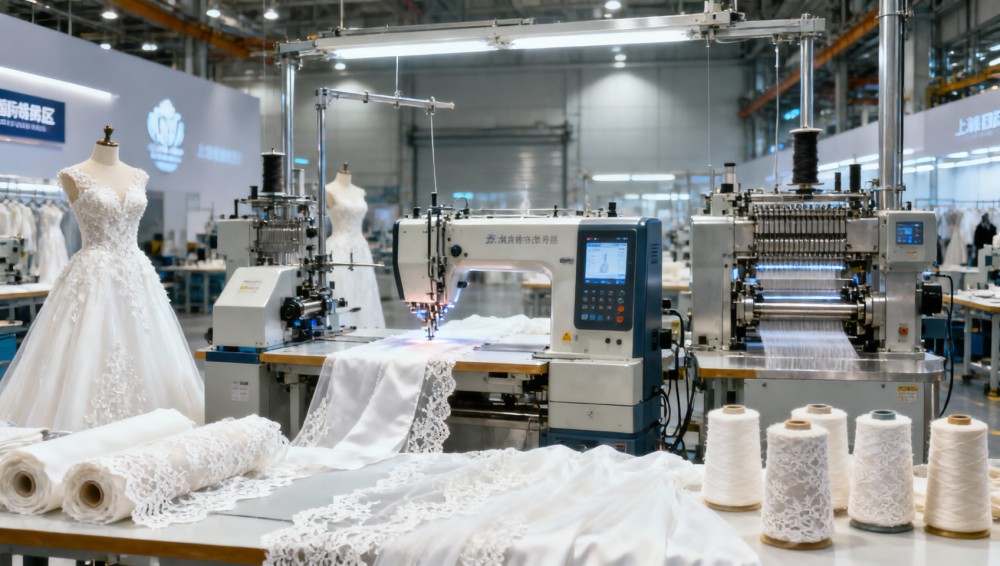
The main transaction categories were intelligent cutting machines, digital direct-to-garment printing machines, and seamless sewing systems designed for bridalwear. The event summary also indicates that these transactions reflect faster automation upgrades on the overseas bridal garment manufacturing side.
Where the impact may be felt first
Equipment exporters are likely to focus on order conversion and delivery execution
From an industry perspective, the most direct impact falls on machinery exporters and trading companies tied to textile and apparel equipment. The reason is straightforward: the reported value comes from export signings concluded on site. What deserves closer attention is not only the amount signed, but also whether demand is clustering around specialized machinery for bridalwear production rather than broad, standard equipment categories.
In practical terms, these companies may need to watch changes in inquiry quality, product mix, and cross-border order follow-up, especially for automation equipment that directly affects cutting, printing, and sewing processes.
Bridal garment manufacturers may face rising pressure to upgrade production lines
Analysis shows that manufacturers serving overseas bridalwear production could be affected through production planning and equipment investment decisions. The concentration of deals in intelligent cutting, digital printing, and seamless sewing systems suggests that efficiency, consistency, and process refinement are becoming more important in bridal garment manufacturing.
For factories, the relevant issue is not simply whether automation is gaining interest, but which processes are being prioritized first. The listed categories point to upstream production steps where labor intensity, precision requirements, or process stability may be under closer scrutiny.
Sourcing and supply-chain service providers may need to track changes in buyer expectations
Observably, sourcing teams, cross-border intermediaries, and supply-chain service providers may also see a shift in buyer conversations. If overseas buyers are accelerating automation upgrades, then procurement discussions may increasingly involve equipment compatibility, installation timing, delivery schedules, and documentation readiness rather than price alone.
The effect would be most visible in project coordination, supplier matching, and communication between machinery sellers and overseas manufacturing users.
Issues companies should watch after the exhibition
Whether signed demand translates into stable export execution
Analysis shows that signed value at an exhibition is an important market signal, but companies should still distinguish between on-site signing and completed delivery. For machinery suppliers and export teams, the immediate task is to monitor follow-up progress on the signed orders and assess whether demand remains concentrated in the same equipment categories.
The product categories attracting the clearest overseas interest
What deserves closer attention is the concentration of transactions in intelligent cutting machines, digital direct printing equipment, and seamless bridalwear sewing systems. For manufacturers and distributors, this provides a clearer near-term reference point than broad claims about upgrading. The useful question is which product lines align with current buyer priorities and which do not.
Country-specific communication and fulfillment preparation
Because buyers came from 17 countries, including Vietnam, Bangladesh, Turkey, and Mexico, companies involved in export transactions should pay closer attention to communication efficiency, order documents, delivery schedules, and after-signing coordination. This is not a confirmed change in rules or trade conditions, but it is a practical area where execution quality can affect whether exhibition demand becomes repeat business.
How specialized bridalwear equipment is being positioned
The appearance of bridalwear-specific seamless sewing systems among key transaction categories is notable. Observably, companies should watch whether overseas demand is moving beyond general textile equipment toward more process-specific solutions for bridal garment production. That distinction matters for product development, sales positioning, and customer support planning.
Why this looks more like a signal than a final conclusion
Analysis shows that this development is better understood as a strong directional signal rather than proof of a fully settled market shift. The confirmed facts point to rising overseas interest in automated equipment for bridalwear manufacturing, and the 37% year-on-year increase in signing value strengthens that reading.
At the same time, the current information is limited to event results and the categories that saw transactions. It does not by itself confirm the pace of downstream installation, long-term repeat procurement, or how widely these upgrades will spread across different overseas production bases. That is why the result matters, but still requires follow-up observation.
How to read the takeaway from this result
The clearest industry meaning of this exhibition result is that overseas bridalwear manufacturing buyers are showing concrete interest in automation-related textile machinery, especially in cutting, printing, and specialized sewing processes. For market participants, this is more appropriate to understand as a near- to mid-term operating signal: demand priorities appear to be shifting in a more equipment-upgrade-oriented direction, but the durability and breadth of that shift still need verification through subsequent order execution and market follow-through.
About the basis of this article
This article is based on the user-provided news title, event date, and event summary related to the 42nd Shanghai International Bridal Fair and its Textile Machinery section. No specific official source link was provided in the input, so the exact official source still needs ongoing verification.
For this type of industry update, commonly relevant source types may include exhibition organizers' announcements, company disclosures, industry association releases, authoritative media coverage, and official trade or standards-related documents. If further updates emerge, the most important areas to track will be follow-up confirmation of signed orders, delivery progress, and whether demand remains concentrated in the same automation-focused machinery categories.
Recommended News
 Outdoor FurnitureHow packaging affects freight costs for wholesale wicker egg chairsExplore wicker egg chair wholesale packaging strategies to cut freight costs, improve container loading, and protect profits. Compare packing options for lower landed costs.Interior Sourcing LeadOct 19, 2026
 Supply Chain InsightsHow to use supply chain resilience metrics to assess recovery riskUse supply chain resilience metrics to compare recovery time, survival buffers, and financial exposure. Learn how to assess disruption risk and prioritize mitigation that protects service.Oct 18, 2026
 Commercial LEDHow to assess an LED street light exporter’s warranty coverageAssess an led street lights exporter beyond warranty length. Learn how to verify coverage, uncover hidden costs, and negotiate stronger terms before you buy.Commercial Tech EditorOct 17, 2026
 Carton & PlasticsWhen should you heat seal aluminum foil zipper bags for food storage?When should you heat seal aluminum foil zipper bags? Learn when stronger closures matter, how to protect dry foods, and which sealing checks help ensure reliable storage.Packaging Supply ExpertOct 16, 2026