Industry News
Curation by industry experts
Hot Articles
Popular Tags
Vietnam Starts Zero Tariff for Smart Printing Equipment Under New RCEP Cumulation Rule
On July 1, 2026, Vietnam’s Ministry of Industry and Trade announced that an upgraded RCEP rule of origin cumulation method would take effect immediately for smart digital textile printing machines under HS 8443.39. The change matters because it allows Chinese, Vietnamese, and other RCEP-member components used in complete machines to be counted together toward the 40% regional value content threshold for a zero-tariff outcome, making this especially relevant for Chinese textile machinery exporters, Vietnam-based fabric processors, and supply chain teams involved in customized printing solutions for bridal fabric production.

What the July 1 Rule Change Confirms
According to the information provided, Vietnam activated an upgraded RCEP cumulation rule on July 1, 2026. Under this arrangement, a complete smart digital printing machine exported between China and Vietnam can combine the value contribution of a Chinese printhead module, a Vietnamese control board, and a power module made in a third RCEP member economy.
If the combined content reaches 40% regional value content, the machine qualifies for a zero tariff. The item specifically referenced is the complete smart digital printing machine under HS 8443.39. The stated direct effect is to support Chinese textile machinery exporters supplying customized printing solutions to bridal fabric processing factories in Vietnam.
Where the Immediate Business Impact May Appear
Equipment exporters may see origin planning become part of pricing
From an industry perspective, Chinese exporters of smart textile printing equipment are among the most directly affected parties because tariff treatment can influence quotation structure, delivery planning, and customer discussions. The practical impact is likely to be concentrated in how exporters organize component sourcing and present origin-related compliance in sales transactions with Vietnamese buyers.
Vietnamese fabric processors may focus on procurement timing and machine configuration
For Vietnam-based bridal fabric processing factories, the rule matters at the equipment procurement stage rather than only at customs clearance. Analysis shows that when tariff eligibility depends on combined regional content across multiple component origins, buyers may pay closer attention to machine configuration, documentation readiness, and the consistency between the ordered specification and the declared origin structure.
Component and supply chain participants gain a clearer place in eligibility calculations
Suppliers of printhead modules, control boards, and power modules may also be affected because the new cumulation method explicitly links component origin to tariff treatment for the complete machine. What deserves closer attention is not only the component itself, but whether the sourcing mix can be documented in a way that supports the 40% regional value content threshold in actual transactions.
Service providers may need to translate policy language into execution steps
Customs support teams, trade compliance staff, and cross-border supply chain service providers may see additional demand for origin calculation, document review, and communication support between exporters and buyers. Observably, the business value here is not the policy headline alone, but whether the transaction can move from component sourcing to delivered equipment without disputes over qualification.
What Companies Should Track in Practical Terms
The distinction between policy eligibility and transaction readiness
Analysis shows that zero-tariff access under the new rule does not remove the need for clear origin substantiation. Companies involved in exports to Vietnam should pay attention to whether their component structure, internal records, and transaction documents are aligned with the cumulation logic described in the announcement.
Whether key product models fit the stated HS category and component path
The rule references complete smart digital printing machines under HS 8443.39 and identifies a component structure involving Chinese printhead modules, Vietnamese control boards, and power modules from another RCEP member. Businesses should therefore focus on whether their actual product models and sourcing arrangements match the scope implied by the announcement before making pricing or delivery commitments on the assumption of zero tariff treatment.
Coordination across sourcing, delivery, and customer communication
For exporters and project teams serving Vietnamese bridal fabric processors, current attention should center on how sourcing decisions affect delivery execution. That includes synchronizing supplier information, origin-related materials, and customer-facing communication so that commercial expectations do not move ahead of compliance preparation.
Follow-up wording from official channels
What deserves closer attention is whether subsequent official explanations, implementation notes, or customs-facing interpretations further clarify how the upgraded cumulation method should be applied in practice. The announcement establishes the rule direction, but companies still need to watch how that direction is translated into operational review standards.
Why This Looks Like More Than a One-Off Tariff Adjustment
Observably, this development is not only about a single tariff outcome for one shipment category. It is more appropriate to understand this as a policy signal about how regional manufacturing inputs can be recognized together within RCEP-based equipment trade. At the same time, analysis should remain disciplined: the information provided confirms the rule change and its direct relevance to China-to-Vietnam smart printing equipment exports, but it does not by itself prove how broadly or how quickly business models will be adjusted across the wider textile machinery market.
For that reason, the industry should treat this as a concrete near-term rule change with longer-term implications that still need to be observed through actual order execution, documentation practice, and buyer acceptance.
How the Market May Best Read This Development Now
At this stage, the most balanced reading is that Vietnam’s July 1 move creates a clearer route to zero-tariff treatment for qualifying smart digital printing machines assembled through regional component participation under RCEP rules. For the textile machinery trade serving Vietnam’s bridal fabric processing segment, the significance lies in the combination of tariff relief and component-origin flexibility. Still, it is more appropriate to understand this as an actionable trade-policy adjustment that requires careful execution, rather than as a fully settled market outcome.
Basis of This Article and What Still Needs Verification
This article is based on the user-provided news title, event date, and event summary. For this type of industry update, commonly relevant source categories may include official government announcements, company notices, industry association releases, authoritative media reporting, and standards or trade-rule documentation.
No specific official source link was provided in the input, so the exact official publication path still requires continued verification. Follow-up attention should remain on any additional official wording, implementation guidance, and transaction-level interpretation related to the upgraded RCEP cumulation rule.
Recommended News
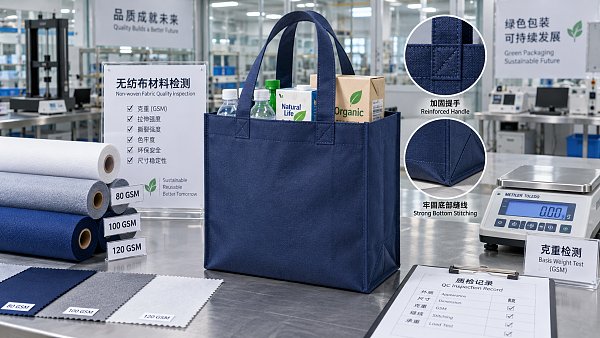
 Fabrics & YarnsWhat fabric weight works best for reusable non woven fabric bags?Non woven fabric for bags: discover the best GSM range for durability, load capacity, print quality, and cost-effective reusable bag sourcing.Textile Industry AnalystSep 30, 2026
 Industrial FastenersWhen do zinc drop in anchors need corrosion-resistant coatings?Zinc drop in anchors need corrosion-resistant coatings in damp, outdoor, chloride-rich, or chemical environments. Learn how to select durable, approved protection.Tooling & Hardware LeadSep 29, 2026
 Carton & PlasticsHow to assess seam quality in 250ml aluminum beverage cansLearn how to assess seam quality in 250ml aluminum beverage cans with practical visual checks, precise measurements, teardown methods, and defect-control guidance.Packaging Supply ExpertSep 28, 2026
 Carton & PlasticsWhat drives breakage rates in bulk wine bottles wholesale orders?Bulk wine bottles wholesale buyers: discover what drives breakage rates, from glass quality and packaging to pallet loading, and reduce costly claims.Packaging Supply ExpertSep 27, 2026