Industry News
Curation by industry experts
Hot Articles
Popular Tags
What to check before choosing a drawer slides manufacturer
For buyers in furniture, interior fit-out, hardware distribution, and OEM manufacturing, drawer slides are a small component with a disproportionate impact. When they fail, the cost does not stay at the component level. It moves into rework, warranty claims, assembly delays, customer complaints, and in some cases lost accounts. That is why choosing a drawer slides manufacturer is rarely just a price comparison exercise. The real question is whether the supplier can consistently deliver the right performance, at the right tolerance level, with the right commercial discipline over time.
Searchers looking into a drawer slides manufacturer are usually trying to answer a practical sourcing question: how do we separate a factory that can quote from a factory that can actually support our program? That distinction matters more now than it did a few years ago. Buyers are dealing with shorter product cycles, more SKU variation, pressure on landed costs, and greater scrutiny on compliance and supply chain resilience. In that environment, the wrong slide supplier can quietly become a recurring operational problem.
Start with the application, not the catalog
Many sourcing mistakes begin with an overly broad inquiry. A manufacturer may present an impressive product range, but range alone does not confirm fit for your use case. Procurement teams should first define the application conditions clearly: residential or commercial use, expected load range, cycle frequency, extension requirement, mounting constraints, corrosion exposure, soft-close requirement, and user expectations for feel and noise.
A drawer slide used in a low-cost ready-to-assemble cabinet does not need the same engineering margin as one used in a laboratory workstation, healthcare environment, mobile storage unit, or premium kitchen system. Even within furniture, the priorities vary. Some programs are cost-sensitive and tolerate simpler designs. Others depend on motion consistency, low deflection, and long cycle life because the end brand is selling perceived quality as much as function.
If your team cannot describe the use case in measurable terms, it becomes difficult to judge whether a manufacturer is genuinely capable or simply flexible in sales language.
Assess manufacturing depth, not just trading capability
One of the first things to verify is whether you are dealing with a true manufacturer, a mixed manufacturer-trader, or a pure trading company. There is nothing automatically wrong with a trading model, but buyers should understand the implications. A direct factory relationship often gives better visibility into tooling, process control, engineering response, and production scheduling. A trader may provide convenience, consolidation, or multilingual account management, but can also add distance between the buyer and root-cause resolution.
In practice, the more customized or performance-sensitive the drawer slide program is, the more important factory-level access becomes. A supplier that owns stamping, forming, ball track processing, plating or coating control, assembly, and testing typically has better control over consistency than one coordinating multiple outside processors without strong integration.
Useful checks include:
- How much of the process is done in-house versus outsourced?
- Who owns the tooling?
- Can the supplier explain key process controls in plain technical terms?
- Are engineering and quality teams available during evaluation, not only sales staff?
- Can they provide production traceability down to lot or batch level?
A manufacturer that cannot answer these questions clearly may still be able to supply standard products, but the risk rises quickly if your program depends on repeatability or custom development.
Quality is not a certificate; it is a control system
Buyers often ask for certifications early, and that is reasonable. But a certificate on its own does not tell you how quality is maintained day to day. For drawer slides, consistency depends on material quality, dimensional accuracy, bearing performance, surface treatment, lubrication control, assembly precision, and final inspection discipline. Minor variation in one step can show up later as rough travel, noise, sagging, uneven closing force, or premature failure.
When evaluating a manufacturer, look beyond whether they claim compliance with ISO 9001 or similar management systems. Ask how they control the characteristics that matter most to slide performance. For example:
- How are incoming steel grades verified?
- What tolerances are controlled on rail forming and channel geometry?
- How is coating thickness monitored if corrosion resistance is part of the specification?
- What endurance or cycle tests are run, and at what load?
- How are soft-close dampers or ball-bearing assemblies qualified?
- What is the rejection and corrective action process when a batch drifts out of spec?
Good suppliers are usually comfortable discussing process capability and failure analysis. Weak ones tend to redirect the conversation toward general factory scale or export history. Those are not the same thing.
Test claims against your actual operating conditions
Published load ratings and lifecycle numbers are useful, but they should not be accepted at face value without context. Load capacity may depend on drawer width, mounting accuracy, extension percentage, duty cycle, and test method. A slide rated for one condition may perform very differently in another. The same caution applies to corrosion claims, especially for products going into humid, coastal, or chemically exposed settings.
This is where many buyers get caught by a common misconception: that a higher nominal load rating automatically means a better slide. In reality, overspecifying can raise cost without solving the real issue, while underspecifying creates field problems that are much more expensive later. What matters is fitness for the end-use profile.
A disciplined evaluation usually includes sample testing under conditions that approximate real assembly and real use. That can include installation on the actual drawer structure, repeated cycling, load checks, side-play assessment, and user feel review by product and quality teams. If the supplier’s sample performs well only in isolated bench testing, that is not enough.
Customization support deserves a hard look
For standard hardware distribution, catalog products may be enough. But many OEM and private-label buyers need more than that: non-standard lengths, special finishes, modified hole patterns, branded packaging, tighter cosmetic standards, or performance tuning for a specific furniture line. In these cases, a drawer slides manufacturer should be assessed not only for production ability but also for engineering responsiveness.
Customization often reveals the difference between factories that can develop and factories that can only quote. Ask how design changes are reviewed, how samples are revised, how tooling changes are priced, and what lead times apply before mass production. Also ask who validates the changes. If engineering sign-off is informal or poorly documented, later disputes become harder to resolve.
For procurement, this matters because customization can improve product-market fit, but it also introduces lock-in risk. A buyer should know whether the modified design is portable to another source, whether tooling is exclusive, and whether critical subcomponents come from a single outside vendor. These are not legal fine points; they affect continuity if the relationship weakens or demand changes suddenly.
Delivery reliability is often more important than the headline unit price
In hardware sourcing, price negotiations are visible and easy to track. Delivery reliability is less visible until it fails, and then it becomes urgent. Drawer slides are frequently integrated into broader production schedules, especially in furniture assembly and project-based manufacturing. A late shipment can stop output even when the component cost is relatively low.
That is why supplier evaluation should include operational discipline. Buyers should ask about monthly capacity, peak-season loading, raw material sourcing stability, lead-time assumptions, minimum order quantities, and buffer inventory options. It is also worth understanding whether the manufacturer has experience serving your order profile. Some factories handle large stable orders well but struggle with mixed-SKU replenishment or frequent design changes.
Questions worth asking include:
- What is the standard lead time, and what causes it to move?
- How much of the bill of materials is exposed to raw material volatility?
- How does the supplier manage schedule changes from key customers?
- What is the on-time delivery record, and how is it measured?
- Can they support demand spikes without moving your orders to lower-priority status?
For global buyers, shipping mode, port exposure, and geopolitical concentration should also be part of the conversation. A capable manufacturer in a fragile logistics corridor may still represent a higher total sourcing risk than a slightly more expensive one in a more stable network.
Compliance and documentation should be practical, not decorative
Depending on destination market and end application, hardware buyers may need documentation related to material safety, restricted substances, corrosion performance, packaging compliance, or broader supply chain due diligence. The exact requirement set varies, and some claims are market-specific, so buyers should verify current obligations for their product category and region【待核实】.
What matters in supplier selection is whether the manufacturer can produce consistent, current, and auditable documentation when needed. That includes test reports, specification sheets, inspection records, and declarations tied to the exact product version being shipped. Generic declarations reused across multiple SKUs without revision control are a warning sign.
For larger procurement organizations, ESG and labor visibility may also enter the evaluation. Even where drawer slides are a small line item, they sit inside a larger supplier governance framework. If your company faces customer audits or retailer requirements, a manufacturer that treats compliance as a documentation afterthought can become a bottleneck.
Do not overlook packaging and post-production handling
In metal hardware, buyers sometimes focus heavily on the slide itself and underestimate how much damage occurs after production. Poor packaging, weak carton design, inconsistent labeling, mixed batches, or inadequate rust prevention can undermine a technically sound product. This becomes more likely on long export routes or in humid storage conditions.
Procurement teams should review how the manufacturer packages slides for both transit protection and warehouse efficiency. The right packaging method depends on the channel. Bulk industrial shipment, e-commerce fulfillment, and OEM line-side delivery all have different needs. If barcoding, kitting, or private-label retail presentation matters, that should be tested early rather than added at the end of the project.
Supplier size can help, but it should not be confused with suitability
There is a natural tendency to assume that a larger factory is a safer choice. Sometimes that is true. Scale can support automation, testing investment, purchasing leverage, and stronger continuity planning. But scale can also come with rigid order structures, slower engineering response, and less attention to mid-sized accounts.
On the other side, a smaller specialist manufacturer may be more flexible and technically engaged, especially in niche slide types or custom projects, but may face greater constraints in surge capacity, compliance infrastructure, or geographic support.
The better question is not simply “How large is the supplier?” but “Is this supplier structurally suited to our program?” A buyer with a long-tail SKU mix, frequent design changes, and moderate order volumes may get better results from a responsive mid-sized manufacturer than from a larger producer optimized for standardized high-volume output.
Use the RFQ process to expose commercial risk early
A well-run RFQ does more than collect prices. It shows how the manufacturer works under commercial pressure. Are quotations complete and technically aligned, or are key assumptions omitted? Are tooling charges, sample policies, packaging terms, and payment conditions stated clearly? Does the supplier flag ambiguities in your drawings and requirements, or simply quote fast?
Fast quoting can be useful, but overly smooth quoting is sometimes a warning. Experienced manufacturers usually ask clarifying questions because they understand where drawer slide programs go wrong: mounting dimensions, installation environment, finish expectations, drawer construction, target cycle life, and packaging method. A supplier that does not challenge weak inputs may also fail later when the requirements become real.
Reference checks should focus on performance under stress
Factory audits and sample reviews are important, but references still matter. The most useful reference conversations are not generic questions about whether the supplier is “good.” They should focus on what happened when there was a problem: quality escapes, shipment delays, engineering changes, claims handling, or raw material volatility.
A manufacturer may perform well when orders are simple and demand is stable. The real test is whether they stay communicative, accountable, and technically competent when conditions become difficult. Buyers should pay attention to response speed, root-cause rigor, and willingness to implement corrective actions that are measurable rather than cosmetic.
A practical selection mindset
When procurement teams choose a drawer slides manufacturer, they are not just buying a hardware item. They are selecting a process partner that will affect product consistency, assembly efficiency, after-sales cost, and supply continuity. The strongest choice is usually not the cheapest quote or the broadest catalog. It is the supplier whose capabilities match the application, whose controls hold up under scrutiny, and whose operating model fits the reality of your demand pattern.
That is usually where the decision becomes clearer. If a supplier can explain its manufacturing controls, support relevant testing, document compliance properly, handle your customization needs, and stay credible on delivery under changing conditions, then the conversation can move to price with more confidence. If those fundamentals are still vague, the low quote is often just the first visible cost.
Recommended News
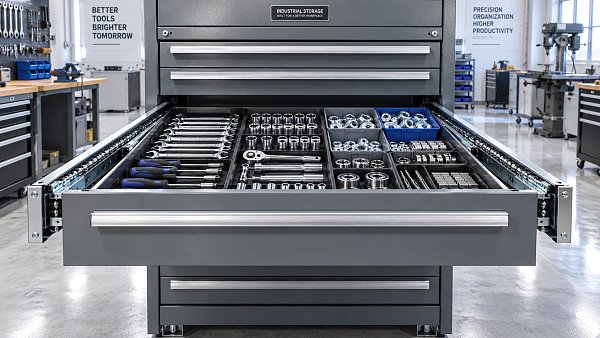
 Building HardwareWhat load rating should you specify for wholesale ball bearing slides?Wholesale ball bearing slides: learn how to specify the right load rating for drawer weight, extension, mounting, and durability. Source smarter and reduce failures.Tooling & Hardware LeadOct 05, 2026
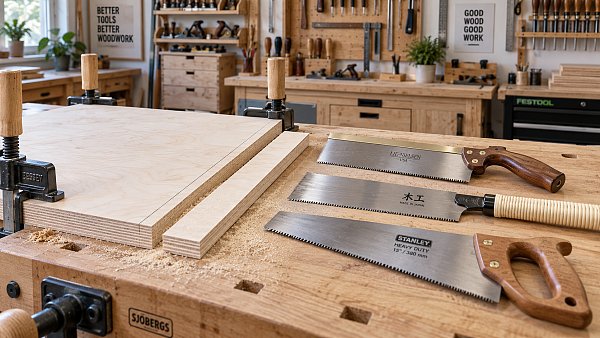
 Hand & Power ToolsHow to choose a hand saw for woodworking without tear-outHand saw for woodworking guide: choose the right tooth pattern, blade, and technique to achieve clean, precise cuts with less tear-out. Explore practical buying tips.Tooling & Hardware LeadOct 04, 2026
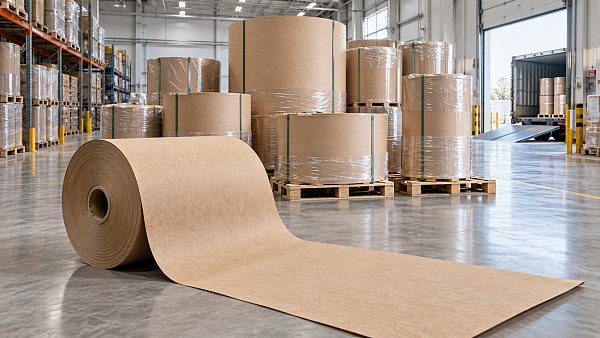
 Eco PackagingWhat affects the price of kraft paper rolls bought wholesale?Kraft paper rolls wholesale pricing depends on grade, basis weight, roll size, order volume, freight, and certifications. Learn how to compare landed costs and choose reliable value.Packaging Supply ExpertOct 03, 2026
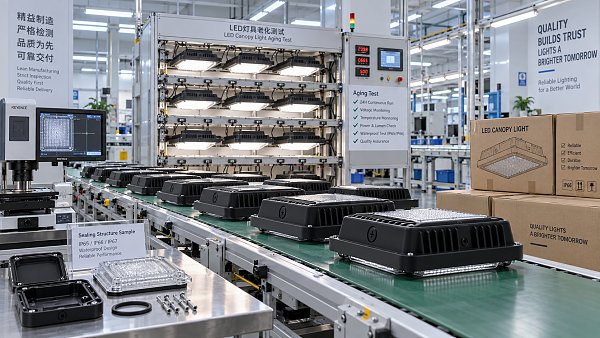
 Commercial LEDHow to evaluate a canopy lights factory before placing a bulk orderCanopy lights factory evaluation guide: verify specifications, compliance, quality control, capacity, and after-sales support before placing a bulk order.Commercial Tech EditorOct 02, 2026