Industry News
Curation by industry experts
Hot Articles
Popular Tags
Does Paper Packaging Quality Affect Product Shelf Life?
The short answer: yes, but only when the package matches the real distribution environment
Does paper packaging quality affect product shelf life? In many categories, it does. The effect is not always direct, and it is rarely determined by paper weight alone. A paper pack can preserve a product effectively, or it can become the reason a product absorbs moisture, loses aroma, becomes contaminated, scuffs during transit, or reaches the customer with damaged seals and reduced perceived quality.
For procurement teams, this matters because shelf-life performance is often evaluated too late. A packaging specification may look acceptable in a supplier sample, pass a basic drop test, and still fail after weeks in a humid warehouse, a cross-border container shipment, or a retail display exposed to changing temperatures. The issue is especially relevant for food, beverages, pharmaceuticals, personal care, electronics, household goods, and premium consumer products, but the underlying lesson applies more broadly: packaging quality is part of product protection, not simply a branding or cost decision.
Paper-based packaging has strong commercial and environmental appeal. It is widely recyclable in many markets, familiar to consumers, printable, adaptable, and often easier to position within fiber-based sustainability strategies. Yet paper is also hygroscopic: it exchanges moisture with the surrounding environment. Unless its structure, coatings, barriers, closures, and converting quality are designed for the application, it may offer limited protection against the conditions that shorten useful life.
What “shelf life” means beyond an expiration date
Shelf life is commonly discussed as the period before a food product becomes unsafe or unacceptable. In B2B operations, the definition is wider. It can include the time during which a product remains functional, compliant, visually acceptable, saleable, and protected from tampering or contamination.
A corrugated box carrying a medical device may not determine the device’s labeled expiry date, but poor board strength can create compression failures that compromise sterile barrier packs inside. A folding carton around a skincare bottle may not stop oxidation on its own, but an ineffective inner liner or closure can allow fragrance loss and leakage. For dry foods, pet treats, coffee, tea, or powdered products, the package may have a more direct role in controlling moisture uptake, oxygen exposure, aroma migration, and light exposure.
The practical question is therefore not whether paper is “good” or “bad” for shelf life. It is whether the complete pack system protects the specific product through its intended storage, transport, retail, and end-use conditions.
Which aspects of paper packaging quality have the greatest impact?
Paper packaging quality is a combination of material selection, barrier design, structural engineering, print and conversion control, and manufacturing consistency. A failure in any one area can undermine the others.
Fiber composition and basis weight
Virgin fiber, recycled fiber, mixed furnish, and specialty pulps behave differently. Recycled content can support circularity targets, but repeated fiber processing may reduce average fiber length and, depending on the grade and process, affect strength, stiffness, and resistance to moisture-related degradation. That does not make recycled paper unsuitable. It means buyers should avoid treating recycled content percentage as the only relevant quality metric.
Basis weight and caliper influence stiffness, burst resistance, print performance, and feel, but heavier paper is not automatically a better barrier. A heavier uncoated sheet can still permit rapid moisture transfer. Conversely, a lighter engineered substrate with an appropriate barrier layer may protect a dry product more effectively. Procurement specifications should identify the functional requirement rather than relying on a single proxy such as grams per square meter.
Moisture and water-vapor resistance
Moisture is one of the most common routes to shelf-life loss. It can cause dry products to clump, soften, lose crispness, or support microbial risk where water activity rises. It can also weaken cartons and corrugated cases, leading to crushed corners, delamination, and pallet instability.
Uncoated paper generally provides limited water-vapor protection. Barrier coatings, laminated structures, wax alternatives, dispersion coatings, extrusion layers, and internal liners may improve resistance, but their suitability varies. A treatment that performs well against a brief splash may not provide enough protection during months of exposure to high relative humidity. Buyers need to distinguish liquid water resistance from water-vapor barrier performance; they solve related but different problems.
Performance data should be requested under conditions relevant to the product and supply chain. Laboratory results are useful, but a packaging supplier should be able to explain how the material behaves after folding, creasing, printing, gluing, and exposure to expected temperature and humidity cycles.
Oxygen, aroma, and grease barriers
For oxygen-sensitive products, paper alone is usually not enough. Foods with fats, roasted coffee, certain nutritional powders, fragrances, and chemically sensitive goods may require a more complete barrier architecture. Oxygen transmission, seal integrity, headspace conditions, and the product’s own sensitivity all matter.
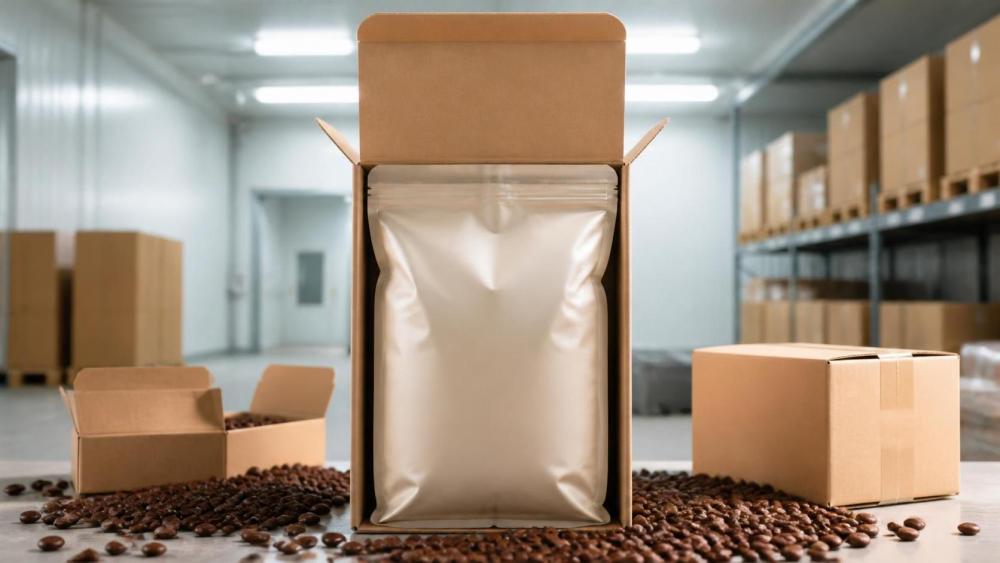
A common misunderstanding is that a thick paperboard carton meaningfully protects a product from oxygen. In many cases, it does not. The primary oxygen barrier may be a pouch, liner, coating, or multilayer component inside the paperboard pack. If that component is downgauged, poorly sealed, punctured, or incompatible with the filling process, the outer carton will not compensate.
Grease resistance is equally application-specific. It may be critical for bakery items, takeaway foods, butter-based confections, hardware with lubricants, or cosmetic products with oil-rich formulas. A package that resists visible staining for a few hours may still fail under prolonged contact, elevated temperature, or stacking pressure.
Light protection and opacity
Light-sensitive products can degrade through photo-oxidation, color fading, flavor changes, or ingredient instability. Paperboard can offer meaningful opacity, particularly compared with clear film, but the level of protection depends on the substrate, color, print coverage, liner structure, and openings in the pack.
For products sensitive to ultraviolet or visible light, buyers should evaluate the entire presentation. A dark printed carton with a clear window may provide less protection than expected. Retail display conditions also matter. A package designed for enclosed secondary transport may be inadequate for prolonged exposure under high-intensity store lighting.
Why packaging failures often emerge after sourcing approval
Packaging procurement frequently separates material approval from real-world performance. One team may approve artwork and visual quality, another may negotiate cost and sustainability claims, while product quality teams focus on the primary container. The gaps appear when the pack moves across different climates, fulfillment channels, and handling systems.
Cross-border supply chains make this more complicated. A paper package can experience hot and humid ports, dry inland warehousing, container condensation, long dwell times, vibration, stacking, and repeated handling before it reaches the final customer. Seasonal variation may turn a marginally acceptable specification into a recurring quality problem.
Manufacturing consistency is another concern. Paper and board are natural-fiber materials, and their properties can vary by mill, batch, moisture content, and converting process. Folding and scoring can crack coatings. Die-cutting can create weak points. Adhesive selection can change carton performance. Poorly controlled glue application can create open seams, while excessive adhesive can lead to warping, staining, or recycling concerns. These are not cosmetic defects when they affect the pack’s protective function.
When high-quality paper packaging is enough, and when it is not
High-quality paper packaging can be entirely appropriate for products with modest barrier needs, short distribution cycles, protected storage, and a separate primary pack that already provides the necessary protection. Examples include outer cartons for sealed cosmetics, transport cases for durable goods, sleeves for bottled products, and folding cartons for items already enclosed in high-barrier pouches or blisters.
Its limits become clearer when the paper pack is expected to act as the primary barrier for moisture-sensitive, oxygen-sensitive, oily, aromatic, sterile, or long-life products. In these situations, a fiber-based solution may still be feasible, but it generally needs deliberate engineering: coated paper, a functional liner, a compatible sealant, an additional inner pack, or a hybrid material structure.
This is where broad sustainability claims can obscure a technical trade-off. A package with less plastic content may improve material reduction or recyclability in one market, yet shorten product life if the barrier is insufficient. The resulting spoilage, returns, and replacement shipments can weaken the environmental case. The right decision considers both packaging end-of-life and the resources embedded in the product being protected.
What should buyers ask before approving a paper packaging supplier?
The most productive supplier conversations start with the product and route to market, not with a request for “premium paper.” A converter needs to understand the product’s sensitivity, pack format, filling process, expected distribution duration, storage conditions, and customer-facing requirements.
- What are the product’s main degradation mechanisms: moisture gain, oxidation, light exposure, contamination, aroma loss, crushing, abrasion, or tampering?
- Is the paper component primary packaging, secondary packaging, or transport packaging? What other layers provide protection?
- What temperature and relative-humidity range is expected during shipping and storage, including worst-case seasonal conditions?
- What performance evidence is available for water-vapor resistance, grease resistance, compression strength, burst strength, puncture resistance, seal integrity, or migration suitability where relevant?
- Have samples been tested after converting, folding, filling, stacking, and transit simulation rather than only as flat material?
- How will lot-to-lot variation be controlled, documented, and handled if a material source changes?
- Which recycled-content, recyclability, food-contact, forestry, or chemical-compliance claims are applicable in the intended destination markets, and which require independent verification?
For regulated applications, buyers should define documentation needs early. Food-contact compliance, chemical restrictions, inks, adhesives, mineral oil concerns associated with some recycled fiber streams, and local extended producer responsibility requirements may all affect material selection. Requirements vary by product and market, so legal or regulatory statements should be verified for the target jurisdiction rather than copied from a general supplier declaration.
Do coatings and laminations solve every shelf-life problem?
No. They can improve performance significantly, but every added layer introduces questions about recyclability, repulpability, cost, sealing, printability, runnability, and end-of-life collection infrastructure. A technically advanced barrier may be appropriate, but it should not be adopted without understanding what problem it solves and what trade-off it creates.
For example, a water-based dispersion coating may support a fiber-forward design and offer useful resistance to moisture or grease, but its actual barrier level can be insufficient for a long shelf-life product in tropical distribution. A film laminate may offer stronger protection, but may complicate recycling depending on its material, thickness, and local processing capabilities. Claims such as “plastic-free,” “compostable,” or “recyclable” require careful interpretation. A claim may be technically valid under specific industrial conditions yet misleading in the markets where the product is actually sold.
The decision should be based on measurable product protection and the practical end-of-life pathway, not on a label alone.
How should procurement teams test the decision?
A sensible validation program begins with a risk map. Identify what is most likely to damage the product, where it is likely to happen, and how severe the commercial outcome would be. A premium food item may justify accelerated aging, humidity cycling, compression testing, seal assessment, and distribution simulation before launch. A low-risk dry consumer good with a short regional supply chain may need a narrower test plan.
Testing should include finished packs from production-representative runs. Flat substrate data can be useful for screening, but it does not reveal failures caused by creases, adhesive bonds, print coverage, die cuts, or packing-line settings. Where shelf-life claims are important, compare product quality at defined intervals using the proposed pack against an established control. The relevant measure may be moisture content, sensory quality, oxygen level, physical integrity, color stability, leakage, or another product-specific indicator.
Cost analysis should also move beyond unit price. Lower-grade board or a thinner barrier may reduce purchase cost while increasing breakage, spoilage, customer complaints, repacking labor, or retailer deductions. Conversely, over-specifying material can lock in cost and environmental burden without adding useful protection. The target is not maximum barrier. It is reliable performance at the lowest total risk-adjusted cost.
The market is moving toward proof, not just material claims
Across packaging supply chains, buyers are asking harder questions about material origin, recyclability, recycled content, transport efficiency, and product protection. These priorities can pull in different directions. The most credible suppliers are increasingly those able to translate a sustainability brief into a documented performance specification, rather than offering generic assurances that paper packaging is inherently better.
For sourcing managers, the immediate implication is straightforward. Treat paper packaging as a functional system with measurable limits. Define the product risk, test the finished format in realistic conditions, confirm how the package will be handled after use, and maintain clear change-control requirements with suppliers. Quality does affect shelf life, but the commercial outcome depends on whether that quality has been specified for the journey the product will actually make.
Recommended News
 Commercial LEDSignify Q3 2026 Earnings: €28 Million Tariff Refund Lifts ProfitExplore Signify Q3 2026 earnings: a reported €28 million tariff refund lifts profit as comparable sales fall 3.4%. Discover the implications for lighting costs and demand.Commercial Tech EditorOct 24, 2026
 Fabrics & YarnsHow to check BS 5852 test reports for fire retardant upholstery fabricChoosing fire retardant fabric for upholstery? Learn how to check BS 5852 reports, verify ignition sources and match tested constructions for confident purchasing decisions.Textile Industry AnalystOct 24, 2026
 Export UpdatesChina’s Textile and Apparel Exports Rise 21.5% in September, Up 5.1% Year to DateChina’s textile and apparel exports rose 21.5% in September and 5.1% year to date. Explore the figures and key signals to watch for sustained industry growth.Oct 23, 2026
 Hand & Power ToolsHow to choose resin-bonded cutting wheels for stainless steelChoose resin bonded cutting wheels for stainless steel with confidence. Compare abrasives, thickness, safety, and cost per cut to find the right wheel for cleaner cuts and less rework.Tooling & Hardware LeadOct 23, 2026