Industry News
Curation by industry experts
Hot Articles
Popular Tags
Which Sustainable Fabrics Are Most Accepted by EU Apparel Brands?
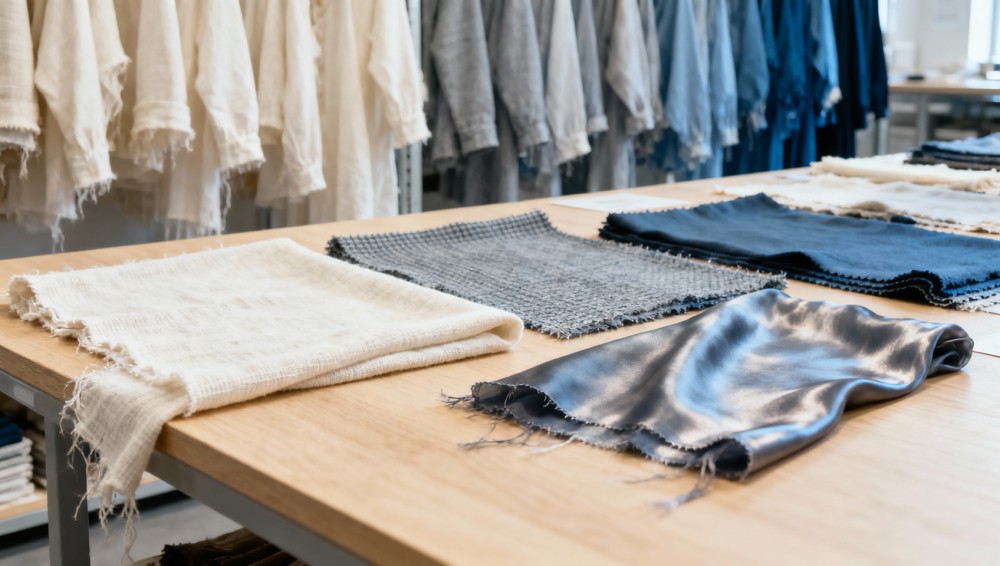
Which sustainable fabrics are most accepted by EU apparel brands? For sourcing teams, the strongest starting points are usually organic cotton, recycled polyester, and responsibly sourced man-made cellulosic fibers such as lyocell and selected viscose. Linen, hemp, and recycled cotton also deserve consideration, especially where their characteristics match the garment’s purpose.
But “accepted” does not mean universally approved. A sportswear brand, a premium womenswear label, and a high-volume basics retailer may evaluate the same fabric very differently. Fiber origin matters, but so do certification scope, chemical management, durability, price, and the supplier’s ability to trace a shipment beyond the fabric mill.
The practical question is therefore not simply which fiber has the best environmental reputation. It is which fabric can pass a particular brand’s material policy, perform in the intended garment, and arrive with evidence that supports the claims attached to it.
The materials most likely to reach a buyer’s shortlist
There is no single public ranking that captures acceptance across all EU apparel brands. However, established sourcing practices point to several recurring options. The following comparison is a procurement guide, not a league table of environmental performance.
A material may be commercially familiar without being the best choice for every product. Recycled polyester can be appropriate for a durable performance jacket, while organic cotton may make more sense for a soft everyday T-shirt. Matching the fiber to the application prevents sustainability claims from becoming disconnected from garment quality.
Organic cotton: a familiar route, provided the evidence travels with it
Organic cotton is a common starting point for EU brands moving established cotton programs toward preferred materials. Its familiarity is valuable: designers understand its handle, factories know how to process it, and consumers recognize the term. That can make adoption easier than introducing an unfamiliar fiber.
The sourcing challenge lies in proving the content and understanding what the certification actually covers. The Organic Content Standard (OCS) verifies organic material content and chain of custody; it does not provide the same processing, chemical, and social requirements as the Global Organic Textile Standard (GOTS). GOTS addresses organic textile processing within its defined scope and criteria.
These distinctions matter during supplier approval. A mill may hold a valid certificate, but that does not automatically mean every fabric it sells is certified. Buyers should check the certified entity, covered activities, product scope, validity, and applicable shipment-level documentation. Any proposed product label or claim must also meet the relevant scheme’s rules.
Organic cotton should not be presented as inherently water-saving in every location. Irrigation, growing conditions, yields, and processing choices all influence the result. For procurement, the stronger proposition is verified organic sourcing combined with dependable quality and responsible wet processing—not a broad promise that cotton has become impact-free.
Recycled polyester: commercially established, but not a complete circularity solution
Recycled polyester is frequently considered for categories that need moisture management, abrasion resistance, low weight, or dimensional stability. Existing polyester production infrastructure helps make it a practical option for many sportswear and outerwear programs.
The Recycled Claim Standard (RCS) and Global Recycled Standard (GRS) are commonly used to support recycled-content verification and chain of custody. GRS also includes processing-related social, environmental, and chemical requirements. Buyers still need to confirm the applicable standard version, certification scope, content requirements, and claim eligibility rather than treating either logo as universal approval.
Feedstock deserves a separate conversation. Polyester made from post-consumer bottles is not the same sourcing proposition as polyester recovered from textile waste. Both can contain recycled material, but they represent different waste streams and recycling pathways. A brand pursuing textile circularity may favor textile-derived feedstock where commercially feasible.
Recycled polyester also remains a synthetic material. Recycling does not remove microfiber-shedding concerns, and blends or certain finishes can complicate future recovery. Request performance evidence for pilling, colorfastness, strength, and relevant moisture-management properties. Where shedding is a priority, ask which test method was used; results from different methods may not be directly comparable.
Lyocell and viscose: look beyond the softness
Man-made cellulosic fibers appeal to brands seeking drape, softness, and comfort. They can work well in dresses, blouses, underwear, and jersey, but describing all wood-based fibers as equally sustainable obscures important differences.
Why lyocell often receives favorable consideration
Lyocell manufacturing commonly uses a solvent-based process designed for substantial solvent recovery. This can support a stronger environmental proposition than poorly controlled conventional viscose production. Nevertheless, buyers should verify the actual producer and process rather than assuming every lyocell supply has identical performance.
Pulp sourcing remains important. Credible forest certification, such as FSC or PEFC where applicable, can support sourcing claims within the relevant certificate scope. It does not establish the complete environmental performance of the finished textile. Forest-risk assessment, pulp traceability, and chemical-management evidence provide additional context.
When viscose can meet brand expectations
Viscose may be accepted when a supplier can demonstrate responsible pulp sourcing and appropriate controls for chemicals, emissions, and wastewater. Some brands use recognized forest-risk assessments, producer evaluations, or specific internal approved lists to guide purchasing.
Ask the supplier to identify both the fiber producer and the wet-processing facilities. “Eco viscose” is not a sufficiently precise specification. A buyer needs a named material, a defined claim, and supporting evidence. For both viscose and lyocell, wet strength, shrinkage, surface appearance, and finishing behavior should be checked against the intended garment.
Linen, hemp, and recycled cotton: valuable options with different trade-offs
Linen and hemp are attractive for brands seeking breathable fabrics with a distinctive texture. Their agricultural characteristics can offer environmental advantages under suitable conditions, but cultivation is only part of the story. Retting, fiber preparation, spinning, dyeing, transport, and finishing also affect the overall profile.
Commercial acceptance often depends on the customer’s expectations. A textured linen shirt can make natural variation part of its appeal. The same variation may be unacceptable in a uniform program that requires tightly controlled shade and appearance. With hemp, buyers should clarify softness, consistency, processing methods, and whether blending is needed to achieve the required handle.
Recycled cotton is particularly relevant to denim and casualwear. Mechanical recycling generally shortens fibers, so manufacturers often blend recycled cotton with other fibers to achieve adequate yarn strength. The appropriate recycled percentage depends on feedstock quality, yarn construction, fabric weight, and performance targets.
Distinguish pre-consumer from post-consumer inputs, and verify the claimed content. A lower recycled percentage in a durable, well-performing fabric may be a better purchasing decision than a higher percentage that causes excessive rejects or shortens garment life. Avoid claiming that any blend is readily recyclable unless a realistic recovery route supports that statement.
What turns a preferred fiber into an approved fabric?
Consider a familiar sourcing situation: the swatch feels right, the quoted price is workable, and the supplier advertises a recognized certificate. Approval still stalls because the certificate belongs to another facility, the dyehouse is unidentified, or the claim cannot be linked to the order. These are documentation problems, not problems a better-looking swatch can solve.
A useful supplier review separates four questions:
- What is the material? Confirm fiber composition, claimed organic or recycled percentage, feedstock where relevant, construction, weight, and finish.
- Where did it come from? Map the relevant fiber, yarn, fabric, and processing stages, including subcontractors.
- What does the evidence establish? Check certificate validity and scope, transaction documentation where required, test reports, and the proposed claim’s exact wording.
- Will it work commercially? Evaluate sample performance, minimum order quantities, lead times, repeatability, capacity, and substitution controls.
Chemical compliance needs its own review. EU REACH requirements and a brand’s restricted substances list concern the finished product, while a manufacturing restricted substances list addresses chemicals used during production. OEKO-TEX STANDARD 100 can support testing for harmful substances within its scope, but it does not by itself verify organic or recycled origin. ZDHC-related evidence may inform chemical-management assessment; it is not proof that a fabric meets every buyer requirement.
These documents complement one another. None should be treated as a shortcut around checking the actual fabric and supply chain.
How EU expectations should shape the sourcing brief
EU policy is pushing textile purchasing toward better durability, transparency, and circularity. The Ecodesign for Sustainable Products Regulation establishes a framework for product requirements and digital product passports, but textile-specific obligations depend on implementing measures and applicable timelines. Buyers should distinguish the framework from requirements already in force.
Likewise, a preferred fiber is not an “EU-approved sustainable fabric.” Acceptance usually comes from a brand’s own material policy, alongside applicable legal requirements. Environmental claims must be specific and substantiated; a certified input does not justify describing an entire garment as universally sustainable.
A stronger sourcing brief includes:
- The intended garment category and measurable performance requirements.
- The permitted fibers, blends, and minimum preferred-material content.
- The accepted evidence and certification requirements.
- Restrictions on finishes, chemicals, and unapproved substitutions.
- Traceability expectations and documents required before shipment.
- The sustainability wording the brand intends to use.
Defining these points before sampling reduces the risk of approving a fabric aesthetically and rejecting it later on evidence.
Choose the most defensible fabric, not the most fashionable claim
For most procurement teams, organic cotton, recycled polyester, and responsibly sourced cellulosics are sensible starting points because they combine established applications with recognizable verification routes. Linen, hemp, and recycled cotton can be equally relevant when the product brief supports them.
The final decision should compare the specific supply chain, not just the fiber name. A traceable, durable fabric with a clear claim is easier to defend than an apparently greener alternative supported only by vague assurances.
Global Supply Review’s role as a B2B intelligence and strategic sourcing hub is to help buyers put material choices in that wider procurement context: supplier capability, documentation, production risk, and commercial fit. The objective is not to find one fabric that every EU brand accepts. It is to identify the right shortlist—and understand what each supplier must prove before an order moves forward.
Recommended News
 Commercial LEDHow to assess an LED street light exporter’s warranty coverageAssess an led street lights exporter beyond warranty length. Learn how to verify coverage, uncover hidden costs, and negotiate stronger terms before you buy.Commercial Tech EditorOct 17, 2026
 Carton & PlasticsWhen should you heat seal aluminum foil zipper bags for food storage?When should you heat seal aluminum foil zipper bags? Learn when stronger closures matter, how to protect dry foods, and which sealing checks help ensure reliable storage.Packaging Supply ExpertOct 16, 2026
 Supply Chain InsightsHow to find a custom-printed ring-pull can supplier for small ordersFind a custom printed ring pull cans supplier for small orders. Compare MOQs, printing options, samples, and delivered costs to launch confidently without excess inventory.Oct 15, 2026
 Fabrics & YarnsWhich Sustainable Fabrics Are Most Accepted by EU Apparel Brands?Which sustainable fabrics are most accepted by EU apparel brands? Explore top materials, certification requirements, and sourcing tips to build a buyer-ready fabric shortlist.Textile Industry AnalystOct 14, 2026