Industry News
Curation by industry experts
Hot Articles
Popular Tags
How to assess the cost drivers in knit garment manufacturing
In knit garment manufacturing, the FOB price is rarely explained by one factor. Two factories can quote the same style with a meaningful gap because they have made different assumptions about yarn yield, machine gauge, dyeing loss, labor content, order size, testing, and delivery terms. The right question is not simply “Which quote is lower?” It is “What is included, what is being optimized, and what cost may return later as a quality, timing, or compliance problem?”
A reliable cost assessment starts by turning a supplier quotation into a set of comparable production assumptions. This matters most when styles look simple. A basic crewneck sweater, ribbed polo, knitted dress, or fine-gauge cardigan may have a clean visual appearance while containing substantial variation in material consumption, knitting time, linking operations, washing, and finishing requirements.
The most useful rule is straightforward: compare like for like before negotiating price. A low quotation is meaningful only when yarn specification, garment weight, measurements, quality standard, packaging, testing, lead time, and commercial terms match the brief.
Start with the real cost structure in knit garment manufacturing
Material is commonly the largest cost element in knitwear, but it should not be treated as a single line item. Yarn type, yarn count, blend ratio, dyeing route, country of origin, and usable yield all affect the final garment cost. A quote based on a different yarn assumption can look competitive while producing a garment that does not meet the intended hand feel, recovery, pilling performance, color consistency, or sustainability requirement.
Ask suppliers to identify the yarn clearly: fiber composition, count or Nm specification, ply, spinning method where relevant, yarn-dyed or piece-dyed status, and nominated mill if one applies. “Cotton yarn” is not a sufficiently detailed basis for comparison. Combed and carded cotton, compact-spun and conventional yarn, virgin and recycled fibers, or different wool grades can lead to visibly different garments and different risk profiles.
For a garment quoted by weight, confirm whether the stated weight is the finished garment weight, the knitting weight, or an estimate before wash and finishing. Shrinkage, relaxation, brushing, washing, and tumble drying can alter both dimensions and weight. A factory that has allowed a realistic process loss may appear more expensive than one using an optimistic consumption figure.
There is also a practical distinction between an inexpensive yarn and a low-cost garment. A lower-priced yarn may increase knitting breaks, shade variation, pilling claims, or fabric rejection. It can still be the right choice for an entry-level program, but only if the product expectation and inspection standard support that decision.
Yarn consumption: where small assumptions become large differences
Many costing disputes trace back to consumption. For knit garments, consumption is shaped by more than the sample weight. Size range, grading, stitch density, rib proportions, neckline shape, sleeve construction, pockets, panels, intarsia, jacquard, and sewing allowance all matter. A supplier should be able to explain its consumption calculation rather than provide only a total yarn kilogram figure.
Consider two factories quoting a women’s fine-gauge cardigan. One calculates from a sample in a small size, using a narrow tolerance and limited wastage. The other includes the larger sizes, normal yarn loss, and a more conservative allowance for linking and finishing. The second factory may not be inefficient; it may simply be costing the full size curve properly.
Request a consumption breakdown for the core size, then ask how the cost changes across the size range. This is especially important where extended sizing is required. It is not reasonable to assume that a larger garment can absorb the same material cost as a small garment without affecting the average unit price or margin.
Color can also change consumption risk. Dark shades, melanges, optical whites, and complex color standards may require stricter dyeing controls or produce higher rejection exposure. If color approval is still open, a quotation should state whether it assumes standard shades and whether lab dips, bulk shade bands, and colorfastness tests are included.
Machine choice and knitting efficiency are not interchangeable
Knitting technology affects cost, capacity, appearance, and lead time. Fully fashioned knitting, cut-and-sew knit construction, seamless knitting, flat knitting, and circular knitting do not carry the same labor content or material efficiency. A price comparison becomes misleading when factories are proposing different construction methods without making that clear.
Fully fashioned panels can reduce cut waste and deliver clean shaping, but they often require more machine time and linking. Cut-and-sew knit fabric may offer speed and flexibility for some categories, though cutting loss and seam appearance need to be considered. Seamless technology can reduce assembly steps for suitable activewear or bodywear styles, but program economics depend heavily on machine availability, yarn behavior, and design complexity.
Gauge is another frequent source of confusion. A finer gauge does not automatically mean a better garment, yet it generally demands more precise yarn, longer machine time, and tighter process control. Higher stitch density can improve surface appearance and stability, but it can also raise knitting time and make defects harder to correct. The specification should state the intended gauge, stitch density, and finished measurements rather than leave the factory to infer them from a photo.
When reviewing a quote, ask one direct question: Which construction and machine setup is assumed, and is that the same method used for the approved development sample? The answer often reveals whether the supplier has costed the actual product or a simpler substitute.
Labor is more than the sewing minute rate
In knitwear, labor cost includes panel handling, linking, overlocking, sewing, trimming, washing preparation, pressing, inspection, repair, folding, and packing. A garment with a simple silhouette can still be labor-intensive when it has contrast tipping, delicate yarn, narrow ribs, tubular trims, fashion marks, embroidery placement, or several linking points.
Factories use different internal costing models, so comparing an hourly wage figure is rarely useful on its own. Better questions focus on operation count and production risk. How many panels are knitted? Are sleeves linked, sewn, or fully fashioned with the body? Is the collar attached by linking? Does the garment require hand repair after inspection? Are labels and hangtags applied manually? These details explain why a style that looks similar on a line sheet may cost more to make.
Do not push a factory to reduce labor allowances without understanding the consequence. Sometimes the result is a reasonable efficiency improvement. Sometimes it means less inspection time, rushed pressing, higher repair rates, or an unrealistic daily output target. Those savings can disappear when shipments need rework or when inconsistent presentation reaches retail.
Dyeing, washing, and finishing can change the commercial outcome
Finishing is where a knit garment becomes the intended product, and it is often under-scoped during early quotation. Garment washing, enzyme wash, silicon softening, anti-pilling treatment, brushing, compacting, steaming, shaping, and special hand-feel processes all need to be defined. A sample approved after a hand treatment cannot be costed as a standard wash-and-press garment.
There are trade-offs. Aggressive softening may improve initial hand feel but can affect absorbency or long-term performance. Brushing can create a desirable surface but may increase shedding or pilling risk. A buyer should not assume that a finishing process is either universally good or universally problematic; its suitability depends on fiber blend, end use, care instructions, and expected wear.
Clarify whether the price includes pre-production testing and bulk testing. Common requirements may include fiber-content verification, dimensional stability, colorfastness, pilling, appearance after laundering, restricted substances, and performance tests required by the destination market or customer. Test protocols and acceptance limits should be agreed before bulk production. Test fees are often modest compared with the cost of a failed shipment, but they must still be allocated clearly in the commercial discussion.
MOQ, capacity, and calendar timing affect price more than many people expect
A factory’s quoted price reflects how efficiently it can run the order, not just how much material is used. Small orders may require yarn minimums, color minimums, frequent machine changes, less efficient line balancing, and separate packing work. A supplier can support a low MOQ, but the unit price should reasonably reflect the setup burden.
Seasonal timing matters as well. A supplier with available machine capacity may offer a more favorable price than one operating near full capacity. That does not mean the first supplier is inherently cheaper. It means the quote reflects current production conditions. For repeat programs, ask for a costing validity period and identify which inputs are fixed, which are subject to confirmation, and what triggers a price revision.
Yarn lead time deserves particular attention. A factory may quote an attractive garment lead time while assuming stock yarn that is unavailable in the required color, certification level, or quantity. Ask for the critical path: yarn booking, color approval, knitting, finishing, inspection, packing, and shipment readiness. It is a better planning tool than a single promised ex-factory date.
Do not compare FOB prices without comparing the boundary of responsibility
FOB should define what the factory is responsible for up to delivery at the named port, but commercial quotations can still vary in what they include. Cartons, polybags, hangers, barcode labels, tissue, moisture protection, export documentation, inland transport, inspection support, and testing administration may be priced differently. A lower FOB quote may exclude packaging details that later become unavoidable charges.
Build a quote comparison sheet with one row for each cost-sensitive assumption. It does not need to expose the supplier’s confidential margin. It should confirm the commercial basis:
- Fiber composition, yarn source, count, blend, and certification requirement
- Finished garment weight and consumption allowance by size range
- Gauge, construction method, panels, trims, and decorative techniques
- Dyeing, washing, finishing, and approved hand-feel target
- MOQ by style, color, and size; plus any yarn or dye minimums
- Testing, inspection standard, defect allowance, and compliance documents
- Packaging specification, labeling, delivery port, and Incoterms version
- Quote validity, currency, payment terms, and conditions for price adjustment
This exercise is not designed to force every supplier into the same production method. Good factories may have different strengths. The point is to distinguish a genuine manufacturing advantage from an incomplete quote.
Compliance and traceability should be costed early
Sustainable fibers, recycled-content claims, organic certifications, social compliance audits, chemical-management requirements, and traceability requests can introduce direct and indirect costs. Some are passed through as yarn premiums, testing charges, certification fees, or additional documentation. Others affect process choice and supplier selection.
The common mistake is treating compliance as a final paperwork request. If certification or chain-of-custody documentation is needed, the yarn source and production route must support it from the beginning. A factory cannot reliably create a credible material claim after bulk yarn has been purchased. Confirm the exact claim permitted on product and packaging, the supporting documents required, and who bears the verification cost.
For complex sourcing decisions, market intelligence platforms such as Global Supply Review can be useful for framing supplier questions across textiles, compliance, and supply-chain conditions. The value is not in replacing factory due diligence. It is in helping commercial teams compare claims, production capabilities, and risk factors with a more consistent evidence base.
How to negotiate without damaging the product brief
The best negotiation target is usually a controllable cost driver, not an arbitrary reduction in the final number. Ask the supplier to present cost-saving options separately: a different yarn source with equivalent approved performance, fewer colors, consolidated order volume, simplified knit structure, standard packaging, adjusted delivery window, or a revised finishing process. Each option should state what changes in the garment or commercial risk.
For example, reducing the number of colors may lower yarn and dyeing complexity. Combining similar styles can improve machine utilization. Replacing a complex jacquard with a simpler knit pattern may reduce machine time. These changes can be productive when the design intent remains intact. They are unsuitable when brand differentiation depends on the exact texture, color, or construction being removed.
Be cautious with blanket requests for “best price.” They often invite suppliers to make silent substitutions, use optimistic yield assumptions, or remove process allowances. A more useful request is: “Please keep the approved specification unchanged and identify the three largest cost-reduction opportunities, including the technical and quality impact of each.”
Make the final decision on total sourcing cost
The lowest unit price is not always the lowest landed or operating cost. A supplier that has stronger sample accuracy, reliable yarn control, stable quality systems, and realistic delivery planning may reduce the cost of delays, claims, re-inspection, emergency freight, and internal management time. That is particularly relevant for repeat business, quality-sensitive retail programs, and products with strict compliance expectations.
Before placing an order, reconcile the approved sample, final tech pack, quotation, and purchase order line by line. Confirm tolerance, color standard, measurement points, care label, packaging, test requirements, and shipment window. Where a cost change has been accepted, record the product implication rather than leaving it in an email thread.
Sound knit garment manufacturing sourcing is not about finding a universal benchmark price. It is about understanding what each factory has priced, validating the assumptions that carry the most risk, and deciding which trade-offs are acceptable for the product and program. That approach produces cleaner negotiations and fewer expensive surprises after bulk production begins.
Frequently asked questions
Should material cost always be the first thing to challenge?
Not necessarily. Material often has the largest influence, but changing yarn can alter hand feel, durability, certification status, and color performance. First confirm whether the quoted yarn matches the approved product requirement.
Why does the sample price differ so much from bulk pricing?
Samples involve low-volume yarn use, machine setup, development work, manual adjustments, and limited production efficiency. Bulk cost should improve, but only after MOQ, yarn availability, and construction are confirmed.
Can two garments with the same composition have very different costs?
Yes. Fiber composition alone does not define yarn quality, gauge, density, construction, finishing, labor content, or quality standard. A “100% cotton” description is far too broad for meaningful costing.
What is the most useful document to request with a knitwear quote?
A detailed cost assumption sheet is usually more useful than a generic price breakdown. It should identify yarn, consumption, construction, finishing, MOQ, packaging, tests, delivery terms, and quotation validity.
Recommended News
 Supply Chain InsightsHow to find a custom-printed ring-pull can supplier for small ordersFind a custom printed ring pull cans supplier for small orders. Compare MOQs, printing options, samples, and delivered costs to launch confidently without excess inventory.Oct 15, 2026
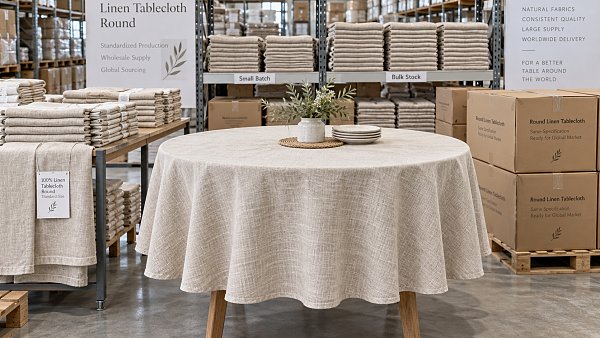
 Home DecorHow order size affects wholesale prices for round linen tableclothsBuying round linen tablecloths wholesale? Discover how order size, freight, and inventory costs affect pricing—and choose the right quantity to maximize real savings.Interior Sourcing LeadOct 14, 2026
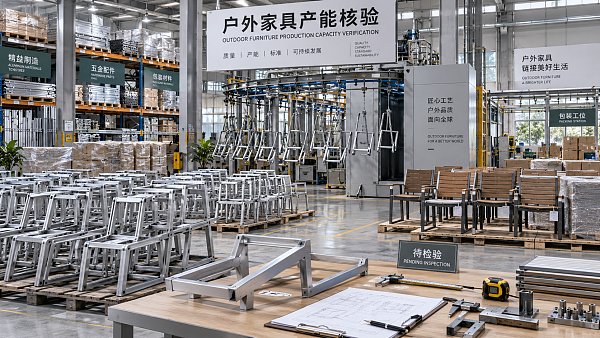
 Outdoor FurnitureHow to verify outdoor furniture manufacturers' production capacityCan outdoor furniture manufacturers deliver on time? Learn how to verify production capacity, uncover bottlenecks, and validate supplier commitments before placing your next order.Interior Sourcing LeadOct 13, 2026
 Commercial DisplaysWhat makes an outdoor digital signage display manufacturer reliable?Discover how to choose a reliable outdoor digital signage display manufacturer with proven weather protection, quality control, smart visibility, and responsive after-sales support.Commercial Tech EditorOct 12, 2026