Industry News
Curation by industry experts
Hot Articles
Popular Tags
Shanghai Bridal Fair Ends With RMB 210M in Machinery Deals
The 42nd Shanghai International Bridal Fair, held from June 10 to June 12, 2026 and closing on June 12, put unusual attention on textile machinery rather than finished gowns alone. For manufacturers of bridalwear, equipment exporters, sourcing teams, and service providers, the reported RMB 210 million in on-site export orders suggests that overseas demand is not only targeting products, but also specialized production capacity tied to higher-value formalwear.
What the exhibition floor confirmed
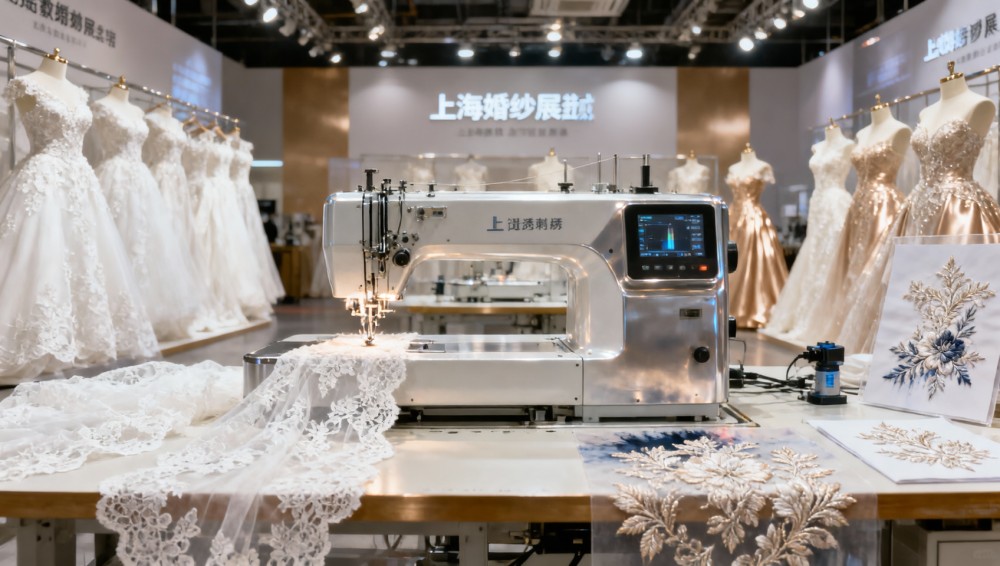
At the 42nd Shanghai International Bridal Fair, the Textile Machinery section emerged as the most prominent area of the event. Exhibits in that section included intelligent embroidery machines, digital direct-to-garment printing equipment, and laser cutting systems designed for bridalwear production.
According to the event information provided, on-site export orders signed in this section reached RMB 210 million. The main destinations named were Vietnam, Bangladesh, Turkey, and Mexico.
The fair also indicated that China’s bridalwear supply chain is accelerating from finished-product exports toward an overseas model that combines equipment, process standards, and localized technical services.
Why different parts of the chain may pay attention
For machinery exporters, the signal goes beyond one-off equipment sales
From an industry perspective, machinery suppliers may read this development as a sign that overseas buyers in bridal and formalwear manufacturing are looking for more specialized production tools. The impact is likely to be felt not only in equipment sales, but also in pre-sales specification matching, installation support, and post-delivery service expectations.
What deserves closer attention is whether buyers increasingly evaluate suppliers on their ability to package machinery with process know-how and service responsiveness, rather than on hardware alone.
For garment manufacturers, production capability is becoming part of market competition
Analysis shows that manufacturers focused on high-value bridalwear may be affected through equipment planning, production workflow design, and quality consistency. The equipment categories highlighted at the fair point to demand for precision, customization, and efficiency in decorative and cutting processes.
For this group, the key change to watch is whether competition in export-oriented bridalwear shifts further toward process capability and delivery stability, especially when serving overseas production bases.
For supply chain and sourcing teams, destination markets matter
The named order destinations—Vietnam, Bangladesh, Turkey, and Mexico—matter because they indicate where equipment demand is currently concentrating. For sourcing teams, trading firms, and supply chain service providers, that can affect market prioritization, delivery coordination, documentation workflows, and local support arrangements.
Observably, the practical issue is less about headline order value alone and more about how cross-border fulfillment, technical handover, and customer communication are organized around these markets.
What companies should watch next
Follow how the integrated export model is described
The event summary points to a combined overseas approach of equipment, process standards, and localized technical services. Companies should pay close attention to how this model is described in future official event communications or related industry statements, because wording changes can reveal whether the focus remains promotional or starts moving into more standardized operating practice.
Prioritize the equipment categories already highlighted
For businesses evaluating product lines or cooperation opportunities, the most immediate reference points are the equipment types explicitly shown at the fair: intelligent embroidery machines, digital direct printing equipment, and bridalwear laser cutting systems. These categories indicate where current demand visibility is strongest within this event context.
Prepare for service and delivery questions, not just sales discussions
Analysis shows that if buyers are moving toward an integrated model, supplier conversations may increasingly involve technical training, process alignment, delivery timing, and local service coordination. That means commercial teams may need to prepare supporting documents, service scope explanations, and fulfillment timelines more carefully.
Separate market signal from confirmed long-term change
Companies should also distinguish between an event-based commercial signal and a fully established structural shift. The fair information points to a direction of travel, but execution details across different markets still require continued verification through follow-up orders, implementation progress, and service delivery outcomes.
How this development is best understood now
Observably, this is more than a narrow exhibition sales update, because the transaction focus sits in specialized machinery for high-value bridalwear production. That said, it is more appropriate to understand this as a strong industry signal rather than a completed long-term result.
Analysis shows that the most meaningful part of the update is not only the RMB 210 million figure, but the form of export implied by it: a shift from selling finished goods toward exporting production capability and operating methods. Whether that shift becomes durable will depend on what happens after exhibition orders move into delivery and service execution.
What the fair may be signaling for the near term
In practical terms, this development suggests that parts of China’s bridalwear supply chain are testing a broader overseas role in which machinery, process standards, and localized technical support travel together. For the market, that is a useful indicator of changing priorities, but not yet a basis for broad conclusions about all export activity.
At this stage, it is more appropriate to read the news as a directional marker with near-term commercial relevance and longer-term strategic implications that still need observation.
Basis of this article
This article is generated from the user-provided news title, event date, and event summary related to the 42nd Shanghai International Bridal Fair and the Textile Machinery section’s reported export orders.
For this type of industry update, commonly relevant source categories may include official event releases, company announcements, industry association updates, authoritative media coverage, and standard-setting or technical documentation. A specific official source link was not provided in the input, so further verification remains necessary.
Areas that still warrant follow-up include how the integrated export model is described in subsequent official communications, whether order implementation progresses as indicated, and how localized technical service is carried out in the destination markets mentioned.
Recommended News
 Carton & PlasticsWhen do double wall corrugated boxes prevent damage in transit?Double wall corrugated boxes prevent transit damage from stacking, impact, punctures, and long-haul handling. Learn when stronger packaging delivers smarter protection.Packaging Supply ExpertSep 14, 2026
 Carton & PlasticsHow to assess a flat bottom pouch supplier’s quality controlsFlat bottom pouch supplier quality controls: assess materials, seal integrity, traceability, change management, and release processes to reduce packaging risk.Packaging Supply ExpertSep 13, 2026
 Office FurnitureHow to compare wholesale commercial carpet tiles by installed costCommercial carpet tiles wholesale: compare installed costs, freight, waste, subfloor prep, labor, and lifecycle value to make smarter procurement decisions.Interior Sourcing LeadSep 12, 2026
 Carton & PlasticsWhen is 200 gsm kraft liner board strong enough for shipping cartons?Kraft liner board gsm 200: learn when it delivers reliable carton strength, how flute, stacking, moisture, and box size affect performance.Packaging Supply ExpertSep 11, 2026