Lead
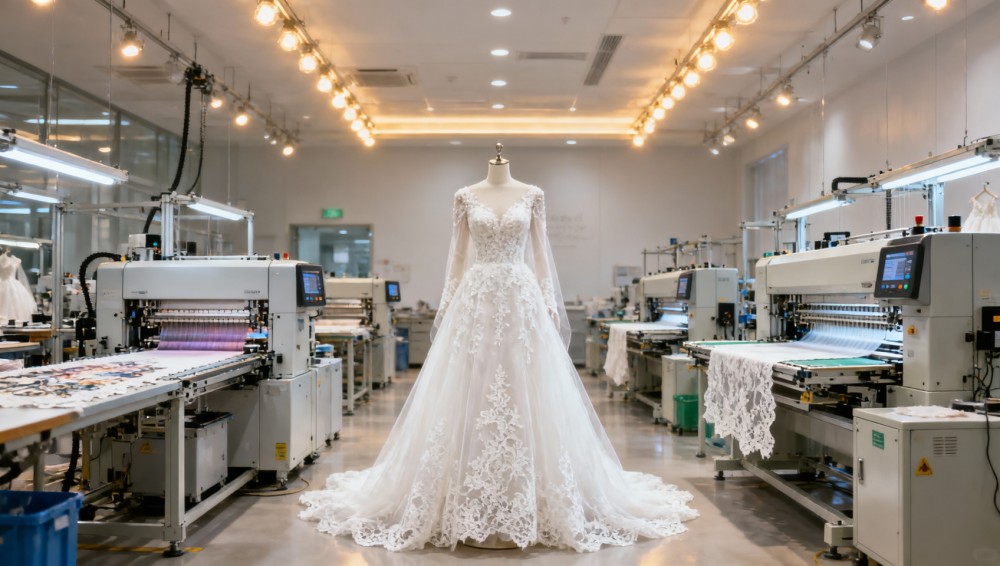
The 42nd Shanghai International Wedding Photography Exhibition, scheduled for July 15–17, 2026 at the Shanghai World Expo Exhibition and Convention Center, will introduce a dedicated “Textile Machinery for Bridal Fabrics” matchmaking zone for the first time. The move deserves attention from bridal fabric suppliers, garment manufacturers, machinery makers, overseas buyers, and supply chain service providers because it connects bridal fashion demand with specialized textile equipment, including high-speed digital printing machines, intelligent cutting beds, and eco-friendly finishing equipment.
Event Overview
According to the available event information, the 42nd Shanghai International Wedding Photography Exhibition will be held from July 15 to July 17, 2026, at the Shanghai World Expo Exhibition and Convention Center.
The exhibition will set up a dedicated matchmaking area named “Textile Machinery for Bridal Fabrics.” The zone will focus on textile machinery used for bridal fabrics, including high-speed digital printing machines, intelligent cutting beds, and eco-friendly finishing equipment.
The organizer, together with the China Textile Machinery Association, will invite 12 leading manufacturers, including Hengtian Heavy Industry and Yuanxin Industry, to participate. The disclosed arrangement also supports overseas buyers in inspecting machines on site and signing ODM or OEM agreements.
The released information indicates that this initiative is connected with the acceleration of Chinese bridal fabric equipment entering overseas markets, especially in relation to flexible capacity upgrades for bridal garment factories in Southeast Asia and the Middle East.
Which Segments May Be Affected
Bridal Fabric and Textile Machinery Manufacturers
Textile machinery manufacturers are directly affected because the new matchmaking zone places bridal fabric equipment in a focused exhibition setting rather than treating it as a general manufacturing category.
From an industry perspective, the impact may appear in three areas: more direct communication with overseas buyers, stronger visibility for specialized bridal fabric machinery, and more opportunities to discuss ODM or OEM cooperation on site. For manufacturers of digital printing machines, intelligent cutting equipment, and finishing equipment, the key issue is whether their products can match the production needs of bridal fabrics, which often require flexibility, visual precision, and finishing consistency.
Bridal Garment Manufacturers in Overseas Markets
Overseas bridal garment factories, particularly those in Southeast Asia and the Middle East as mentioned in the event information, may be affected because the zone creates a concentrated opportunity to inspect equipment and discuss production cooperation.
Analysis shows that the main impact is not only equipment procurement, but also the possible adjustment of production capacity structure. If factories are considering flexible manufacturing upgrades, on-site machine inspection and ODM or OEM discussions may help them evaluate whether Chinese equipment suppliers can support smaller-batch, more responsive bridalwear production.
Bridal Fabric Suppliers and Processing Enterprises
Fabric suppliers and processing enterprises may be affected because the machinery categories highlighted at the event are closely related to fabric appearance, cutting efficiency, and post-processing quality.
Observably, high-speed digital printing machines may influence how bridal fabric patterns are developed and delivered, while intelligent cutting beds may affect material utilization and production workflow. Eco-friendly finishing equipment may also become relevant for suppliers that need to meet buyers’ expectations for cleaner processing, although the event information does not provide specific standards or regulatory details.
Export-Oriented Trading Companies and ODM/OEM Service Providers
Trading companies and ODM/OEM service providers may be affected because the event explicitly supports overseas buyers in signing ODM or OEM agreements with participating manufacturers.
What deserves closer attention now is the shift from simple product display to technical matchmaking. For companies that coordinate between machinery makers, garment factories, and buyers, the event may create new business communication points around machine performance, delivery capability, after-sales coordination, and localized production requirements.
Supply Chain and Channel Service Providers
Supply chain service providers, including those involved in equipment sourcing coordination, buyer reception, procurement communication, and cross-border service support, may also be affected.
From an industry perspective, the impact is mainly reflected in the need to support more technical buyer inquiries. Unlike general exhibition sourcing, textile machinery matchmaking usually requires clearer documentation, demonstration arrangements, specification comparison, and follow-up coordination between buyer requirements and manufacturer capabilities.
What Companies and Practitioners Should Watch and How to Respond
Track Official Updates on Exhibitor Scope and Matchmaking Arrangements
Companies planning to attend should continue to monitor official event information regarding the final exhibitor list, machine categories, matchmaking schedule, and on-site inspection procedures.
This is especially important because the currently disclosed information confirms 12 invited leading manufacturers and several equipment categories, but does not provide all technical details. Buyers and service providers should avoid making procurement assumptions before confirming machine specifications, demonstration availability, and cooperation terms directly with exhibitors.
Focus on Equipment Categories Closely Linked to Bridal Fabric Production
Bridal fabric and garment companies should pay particular attention to the three equipment directions already mentioned: high-speed digital printing machines, intelligent cutting beds, and eco-friendly finishing equipment.
Analysis shows that these categories are relevant to different production links. Digital printing may affect fabric visual development, intelligent cutting may affect production efficiency and cutting precision, and finishing equipment may affect final fabric handling. Companies should prepare specific questions based on their current production bottlenecks rather than treating the zone as a general machinery display.
Separate Market Signals from Actual Business Implementation
It is more appropriate to understand this event as a signal of stronger technical connection between China’s bridal fabric equipment suppliers and overseas bridal manufacturing demand, rather than as proof that large-scale business results have already been achieved.
Companies should distinguish between exhibition intentions, on-site agreement discussions, and actual production deployment. Before signing ODM or OEM agreements, buyers should review machine suitability, service capability, delivery arrangements, and the compatibility of equipment with their existing production workflow.
Prepare Procurement and Communication Materials in Advance
Overseas buyers and bridal garment factories should prepare practical materials before attending, including current production requirements, fabric types, target capacity ranges, preferred cooperation models, and questions on equipment maintenance or service support.
For machinery manufacturers, practical preparation should include clear product specifications, demonstration plans, export cooperation documents, and communication materials for ODM or OEM discussions. Since the event is designed as a technical matchmaking zone, clear technical communication will be more useful than broad product promotion.
Editor’s View / Industry Observation
Observably, the newly added textile machinery matchmaking zone changes the focus of the bridal exhibition from finished bridal products and related services toward a more equipment-driven supply chain discussion.
Analysis shows that this does not yet represent a completed transformation of the bridal fabric equipment market. It is better understood as an early and visible signal that bridal fabric machinery, flexible production upgrades, and overseas manufacturing cooperation are becoming more closely connected.
From an industry perspective, the event is worth continuous attention because it brings together three elements in one setting: specialized machinery for bridal fabrics, overseas buyer inspection, and potential ODM or OEM cooperation. Whether this signal turns into actual business growth will depend on machine performance, buyer confidence, service execution, and the ability of manufacturers to support overseas production needs.
Conclusion
The addition of the “Textile Machinery for Bridal Fabrics” zone at the 42nd Shanghai International Wedding Photography Exhibition gives the bridal supply chain a more technical and production-oriented point of focus.
For machinery manufacturers, it may create a more targeted export communication channel. For bridal garment factories and fabric processors, it provides an opportunity to assess equipment that may support flexible capacity upgrades. For trading and supply chain service companies, it increases the need for more technical and structured buyer support.
At this stage, it is more appropriate to understand the development as an industry signal rather than a confirmed market outcome. Companies should follow the official event updates, verify equipment details, and approach ODM or OEM discussions with practical procurement and production requirements.
Information Sources
Primary source: event information provided for the 42nd Shanghai International Wedding Photography Exhibition, scheduled for July 15–17, 2026 at the Shanghai World Expo Exhibition and Convention Center.
Referenced source within the event information: organizer arrangement in cooperation with the China Textile Machinery Association.
Items requiring continued observation: final exhibitor details, confirmed on-site machine demonstrations, specific ODM or OEM agreement terms, and actual overseas buyer participation during the exhibition.