Industry News
Curation by industry experts
Hot Articles
Popular Tags
Supply Chain Resilience Procurement: 7 Risks to Check Before Sourcing
Supply chain resilience procurement starts with context, not price alone
Supply chain resilience procurement has become a practical sourcing discipline rather than a defensive slogan.
Volatility now comes from several directions at once.
A factory can quote competitively, yet still create hidden exposure through weak traceability, unstable freight options, or poor change control.
That is especially true across light manufacturing categories where buying conditions differ sharply.
Textiles may hinge on fiber origin and compliance evidence.
Packaging may depend on resin swings, print consistency, and recyclability claims.
Hardware, lighting, and furniture bring their own engineering, logistics, and after-sales risks.
In practice, supply chain resilience procurement works best when sourcing decisions reflect the operating scenario behind the order.
A launch program, a refill cycle, and a long-tail spare parts requirement should not be evaluated with the same checklist weight.
This is why data-led sourcing platforms such as Global Supply Review matter.
Reliable decisions come from verified market signals, technical scrutiny, and category-specific judgment, not from quotations viewed in isolation.
Why the same sourcing model fails in different operating situations
The first mistake in supply chain resilience procurement is assuming all sourcing risks behave the same way.
They do not.
A seasonal retail program usually values speed, flexible replenishment, and packaging continuity.
An industrial component program tends to care more about process control, dimensional tolerance, and replacement certainty.
A commercial lighting project may look healthy at the sample stage, then fail later because software compatibility or certification timing was never checked.
More often, the strongest indicator is not the quoted unit cost.
It is the supplier’s ability to keep quality, compliance, and delivery stable when demand shifts or input costs move.
That ability must be tested against the specific sourcing situation, not against a generic vendor score.
Seven risk checks that matter before a sourcing decision
1. Supplier concentration risk becomes visible during disruption, not onboarding
Single-region dependency still appears in many categories, especially in trim, fittings, specialty coatings, and display components.
Supply chain resilience procurement should test whether output can shift across sites without requalification delays.
If not, a low-cost source may still be a fragile source.
2. ESG exposure is often buried in second-tier inputs
In textiles and packaging, recycled content, chemical restrictions, and labor documentation can vary across subcontracted processes.
The relevant question is not whether a supplier has a policy.
It is whether claims can be traced to batch level evidence.
3. Logistics resilience depends on lane structure, not freight rates alone
Bulky furniture, printed packaging, and mixed hardware shipments face very different freight exposure.
Check lead time buffers, port alternatives, carton efficiency, and damage rates.
A cheaper ex-works price can disappear once re-routing and claims are included.
4. Quality stability matters more than sample quality
A polished pre-production sample often hides process inconsistency.
Supply chain resilience procurement should review change logs, incoming material control, test frequency, and corrective action discipline.
This is critical where appearance and fit both matter, such as decor, printed surfaces, and visible fasteners.
5. Engineering compatibility can break continuity after launch
Lighting assemblies, hardware systems, and modular furniture often depend on interface consistency.
A source may meet the drawing but still fail field use because firmware, connector standards, or installation tolerances were simplified during quoting.
6. Financial fragility shows up in fulfillment behavior
Late material buying, sudden deposit requests, and unexplained MOQ changes can indicate cash pressure.
In supply chain resilience procurement, these signs deserve attention even when delivery performance still looks acceptable.
7. Recovery capability is the real resilience test
Disruption is not always avoidable.
The better question is how quickly a source can recover.
Look for alternate tooling plans, substitute material approvals, emergency capacity options, and documented communication protocols.
Different categories shift the weight of each checkpoint
The same seven checks apply widely, but their priority changes by category and operating model.
This is where a category-aware intelligence source adds value.
Cross-industry visibility helps separate a routine supplier issue from a structural market risk.
Where misjudgment usually happens before contracts are signed
Several misreads keep appearing in sourcing reviews.
- Treating a compliant sample as proof of stable mass production.
- Comparing suppliers by unit cost while ignoring defect recovery and rework time.
- Assuming similar products use similar sub-suppliers and controls.
- Approving sustainability claims without verifying chain-of-custody support.
- Overlooking how tooling, molds, dies, or digital files would transfer during disruption.
In real sourcing work, these errors rarely appear dramatic at the beginning.
They usually emerge as late shipments, specification drift, claim disputes, or unexpected switching costs.
A practical way to apply supply chain resilience procurement before award
A workable approach is to score risk by scenario, not by supplier profile alone.
For example, a source may suit stable replenishment but fail a rapid launch window.
Another source may handle engineering complexity well, yet remain exposed on ESG documentation.
Before award, it helps to document three layers.
- Business exposure: revenue sensitivity, launch deadlines, service obligations.
- Supply exposure: site concentration, tier-two dependency, freight routes, cash stability.
- Technical exposure: compliance evidence, tolerance risk, field performance, change control.
That framework keeps supply chain resilience procurement grounded in operational reality.
It also improves discussions with verified market intelligence providers and technical reviewers, because the decision criteria are explicit.
What to do next when resilience matters more than a clean quote sheet
The strongest sourcing decisions usually come from a narrow set of disciplined checks.
Map the operating scenario first.
Then test supplier concentration, ESG traceability, logistics options, process stability, engineering fit, financial signals, and recovery readiness against that scenario.
Supply chain resilience procurement is ultimately about choosing sources that stay workable when conditions stop being normal.
For the next review cycle, build a category-specific checklist, compare failure paths across shortlisted sources, and verify which assumptions are supported by evidence rather than claims.
That step will do more for continuity than another round of price negotiation.
Recommended News
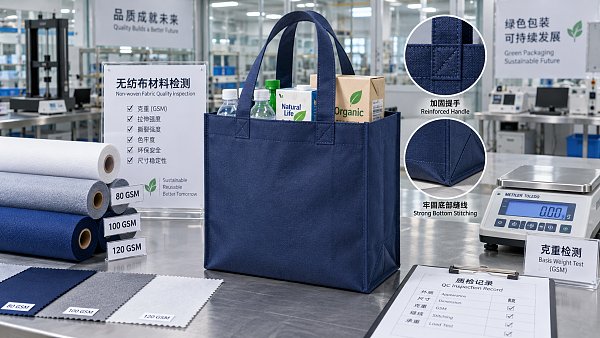
 Fabrics & YarnsWhat fabric weight works best for reusable non woven fabric bags?Non woven fabric for bags: discover the best GSM range for durability, load capacity, print quality, and cost-effective reusable bag sourcing.Textile Industry AnalystSep 30, 2026
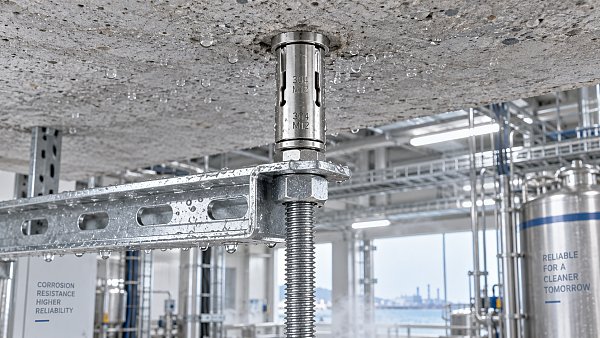
 Industrial FastenersWhen do zinc drop in anchors need corrosion-resistant coatings?Zinc drop in anchors need corrosion-resistant coatings in damp, outdoor, chloride-rich, or chemical environments. Learn how to select durable, approved protection.Tooling & Hardware LeadSep 29, 2026
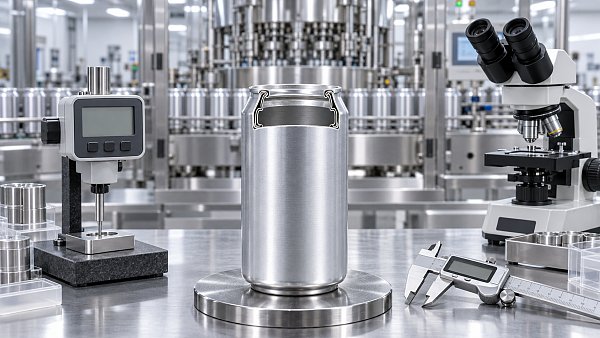
 Carton & PlasticsHow to assess seam quality in 250ml aluminum beverage cansLearn how to assess seam quality in 250ml aluminum beverage cans with practical visual checks, precise measurements, teardown methods, and defect-control guidance.Packaging Supply ExpertSep 28, 2026
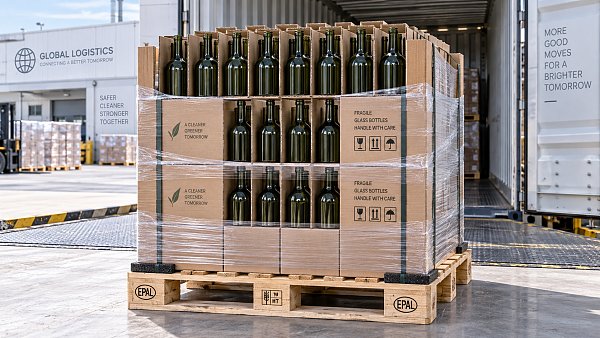
 Carton & PlasticsWhat drives breakage rates in bulk wine bottles wholesale orders?Bulk wine bottles wholesale buyers: discover what drives breakage rates, from glass quality and packaging to pallet loading, and reduce costly claims.Packaging Supply ExpertSep 27, 2026