Industry News
Curation by industry experts
Hot Articles
Popular Tags
Light Manufacturing Cost Pressures in 2026: What Is Changing
In 2026, cost pressure in light manufacturing is no longer coming from one obvious source. It is forming through several layers at once, including labor repricing, unstable energy markets, tighter compliance expectations, and a more selective approach to sourcing geography.
That matters because light manufacturing sits close to end-market demand. In textiles, packaging, hardware, lighting, and furniture, even small cost shifts can quickly affect margin, lead time, and inventory risk.
The practical challenge is not only that costs are rising. It is that the cost structure itself is changing, which makes old purchasing assumptions less reliable.
Why 2026 feels different
Previous cost cycles often centered on freight spikes or raw material shocks. In 2026, the pressure is broader and more structural.
Wage growth in key production regions is continuing, but not evenly. Some markets are adding social insurance, overtime enforcement, and worker retention costs that do not appear in a simple hourly rate comparison.
Energy is another moving target. Electricity pricing, fuel exposure, and grid reliability now shape quoting behavior in many light manufacturing categories, especially where finishing, molding, coating, drying, or climate control are essential.
At the same time, compliance is becoming a direct cost input. ESG documentation, traceability systems, recycled content validation, chemical restrictions, and audit readiness all carry operating expense.
The result is a market where unit price alone tells less of the story than before.
What cost pressure means in light manufacturing
In light manufacturing, cost pressure does not only mean factories charging more. It also includes hidden burdens that appear later in production, logistics, quality control, or replenishment cycles.
A supplier may hold pricing steady, for example, while increasing minimum order quantities, extending lead times, narrowing tolerances on custom work, or reducing flexibility on payment terms.
That is why cost analysis in 2026 needs to separate visible price inflation from operational cost migration.
Common forms of cost migration
- More tooling charges for shorter production runs
- Higher packaging standards tied to retail or export compliance
- Longer sampling cycles for regulated materials
- Surcharges linked to fuel, power, or rushed capacity
- Greater carrying cost from buffer inventory requirements
For many businesses, these shifts are more damaging than a transparent price increase because they are harder to model early.
The cost drivers changing fastest
Labor is becoming more complex
Labor arbitrage still exists, but it is less straightforward. Basic wage comparisons now miss the impact of workforce turnover, training time, labor regulation enforcement, and local competition for skilled operators.
This is especially relevant in light manufacturing segments with craftsmanship or process sensitivity, such as garment finishing, decorative printing, precision fastening, and upholstered furniture assembly.
Energy is entering the sourcing equation earlier
Factories with high exposure to heat treatment, injection molding, polishing, LED assembly, or climate-controlled storage are treating energy as a strategic cost line, not a background utility.
Where power availability is unstable, suppliers may price in downtime risk, backup generation, or schedule padding. That affects both cost and delivery reliability.
Compliance now affects commercial terms
In 2026, buyers are expecting more from suppliers than finished goods. They also expect evidence.
For light manufacturing, this includes chain-of-custody records, restricted substance declarations, packaging sustainability claims, factory audit performance, and product safety consistency.
Suppliers that can provide this smoothly often command better pricing. Suppliers that cannot may appear cheaper until a shipment delay, claim dispute, or approval failure changes the total cost.
How pressure varies across major categories
Not every part of light manufacturing is moving the same way. The five pillars tracked by Global Supply Review show different pressure points.
This variation matters because broad sourcing strategies often fail when category economics are treated as identical.
Supply chain realignment is changing the math
Many sourcing networks are still adjusting their footprint. Some production is moving closer to demand centers. Some is diversifying into secondary markets. Some is staying put but becoming more selective.
This does not automatically lower cost. In many cases, it redistributes cost toward setup, qualification, smaller scale, and parallel supplier management.
For light manufacturing, dual sourcing and regional balancing can improve resilience, but they also require better specification control and stronger supplier data.
That is one reason intelligence platforms such as GSR are gaining relevance. Market visibility is no longer a nice addition to sourcing; it supports cost interpretation itself.
Where businesses are misreading the risk
A common mistake is assuming that the lowest quoted source remains the lowest-cost option through delivery and replenishment.
Another is treating compliance as a separate legal or sustainability topic. In 2026, compliance failure often appears first as a cost event.
Examples include relabeling, retesting, rejected material lots, customs holds, retailer penalties, or delayed product launches.
There is also a tendency to underestimate the cost of poor information. In light manufacturing, weak visibility around capacity, input sourcing, and production discipline can distort planning long before a disruption becomes visible.
A practical way to evaluate 2026 cost exposure
A useful approach is to move from price comparison to cost architecture review. That means asking where cost sits, how fast it can change, and which factors are controllable.
Key questions worth testing
- Which items are most exposed to labor-sensitive processes?
- How much of the quote depends on energy-intensive operations?
- What compliance documents are required before shipment, not after?
- Where are minimum order quantities masking risk?
- Which suppliers can absorb volatility without cutting quality?
These questions help separate temporary price noise from structural cost exposure.
What deserves attention next
The most effective response to 2026 pressure in light manufacturing is usually not a single negotiation cycle. It is a better decision framework.
That framework should combine landed cost analysis, category-specific risk signals, supplier capability evidence, and a realistic view of compliance readiness.
It also helps to track cost indicators by product family rather than by supplier alone. A factory may be competitive in one process and exposed in another.
For organizations reviewing sourcing strategy this year, the next step is to map which cost drivers are now structural, which remain cyclical, and which can be reduced through specification, supplier mix, or regional balance.
That is where current market intelligence becomes practical. When the cost base is shifting across textiles, packaging, hardware, lighting, and furniture at different speeds, better decisions depend on better signals, not broader assumptions.
Recommended News
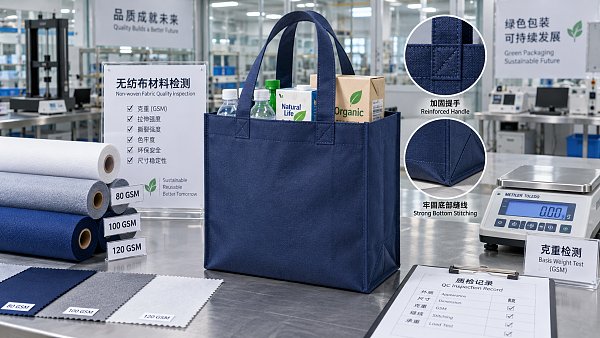
 Fabrics & YarnsWhat fabric weight works best for reusable non woven fabric bags?Non woven fabric for bags: discover the best GSM range for durability, load capacity, print quality, and cost-effective reusable bag sourcing.Textile Industry AnalystSep 30, 2026
 Industrial FastenersWhen do zinc drop in anchors need corrosion-resistant coatings?Zinc drop in anchors need corrosion-resistant coatings in damp, outdoor, chloride-rich, or chemical environments. Learn how to select durable, approved protection.Tooling & Hardware LeadSep 29, 2026
 Carton & PlasticsHow to assess seam quality in 250ml aluminum beverage cansLearn how to assess seam quality in 250ml aluminum beverage cans with practical visual checks, precise measurements, teardown methods, and defect-control guidance.Packaging Supply ExpertSep 28, 2026
 Carton & PlasticsWhat drives breakage rates in bulk wine bottles wholesale orders?Bulk wine bottles wholesale buyers: discover what drives breakage rates, from glass quality and packaging to pallet loading, and reduce costly claims.Packaging Supply ExpertSep 27, 2026