Industry News
Curation by industry experts
Hot Articles
Popular Tags
US Emergency Lighting Market: How Codes Drive Retrofit Planning and Demand
The US emergency lighting market is being driven less by simple fixture replacement and more by code compliance, facility risk management, and modernization planning.
For project managers, the central question is not whether aging emergency lighting should be upgraded, but how to sequence compliant upgrades without disrupting operations or budgets.
Successful retrofit programs begin with a documented code review, a realistic condition assessment, and procurement decisions that support testing, maintenance, and future expansion.
Why Code Requirements Are Reshaping Emergency Lighting Retrofit Demand
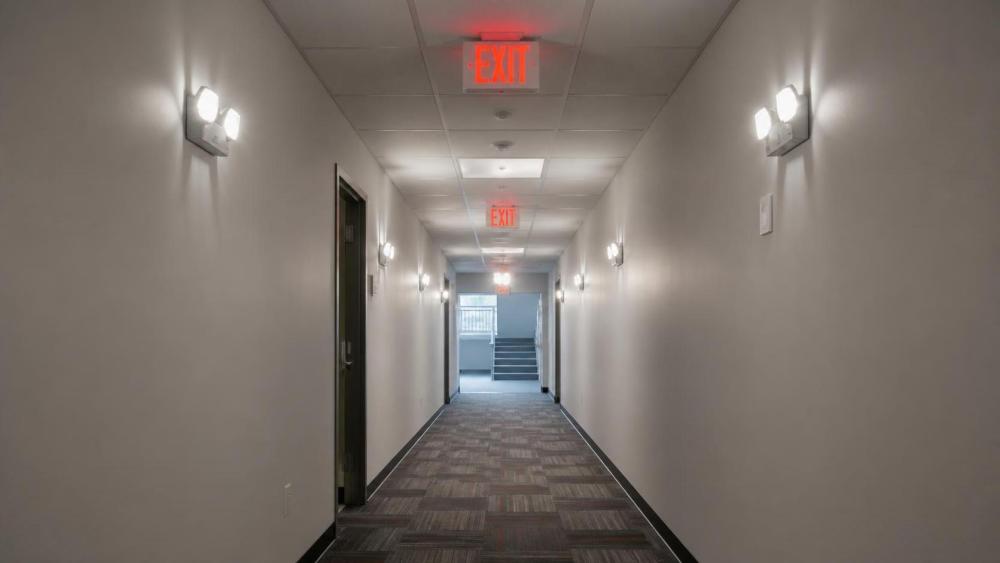
Emergency lighting is a life-safety system, so facility owners cannot treat failed exit signs or aging battery units as routine maintenance issues.
Building codes, fire codes, electrical standards, and local authority requirements establish minimum performance expectations for illumination, backup duration, testing, and equipment placement.
In many projects, the immediate trigger is a failed inspection, an occupancy change, a renovation permit, or an insurance-related risk review.
These triggers create concentrated demand within the US emergency lighting market because corrective work often must be completed before occupancy approval is issued.
Project leaders should distinguish between code-required corrections and discretionary upgrades, because each category has different approval paths, schedules, and financial justification.
A failed battery pack may require an immediate replacement, while a centralized monitoring platform may be justified through lower maintenance effort and stronger compliance documentation.
Federal standards provide a broad foundation, but enforcement commonly happens at state and local levels through adopted versions of model codes and local amendments.
This means identical facilities in different jurisdictions may face different testing practices, equipment expectations, inspection priorities, and permit documentation requirements.
Engineering teams should confirm which editions of the International Building Code, International Fire Code, National Electrical Code, and NFPA standards apply locally.
They should also verify whether the authority having jurisdiction requires additional emergency lighting calculations, photometric documentation, commissioning records, or witnessed functional tests.
What Project Managers Must Verify Before Selecting Retrofit Equipment
Equipment selection should begin with a site inventory rather than a catalog review, because fixture condition alone does not reveal system-level compliance gaps.
A practical inventory records fixture type, location, mounting height, circuit source, battery condition, lamp technology, test accessibility, and observed obstruction risks.
Teams should map egress paths, stairwells, corridors, exit discharge areas, electrical rooms, assembly spaces, and other locations where emergency illumination matters.
The mapping exercise identifies whether existing fixtures support actual evacuation routes, rather than merely meeting an outdated placement pattern from previous renovations.
Emergency lighting requirements often involve minimum illumination levels along egress paths and a defined duration of backup operation after normal power loss.
Project managers should ask the engineer to evaluate performance at the end of the required discharge period, not only during initial battery operation.
This distinction is important because battery degradation, temperature exposure, fixture aging, and added building loads can reduce real-world emergency performance over time.
Exit signs deserve separate attention because they provide wayfinding rather than area illumination, yet they are frequently included in the same retrofit scope.
Older incandescent or fluorescent exit signs can create avoidable maintenance costs, while modern LED models typically reduce energy use and replacement frequency.
However, lower energy consumption does not automatically establish compliance; sign visibility, directional arrows, placement, mounting, and backup power must still be evaluated.
Retrofit specifications should identify approved manufacturers, required listings, compatible batteries, environmental ratings, and replacement-part availability for the expected facility lifecycle.
For large portfolios, standardizing several approved product families can simplify procurement, technician training, spare-parts stocking, and future emergency repair response.
How Technology Choices Affect Compliance, Cost, and Maintenance
Most retrofit decisions involve a choice among self-contained emergency units, emergency drivers, generator-backed fixtures, inverter systems, or centrally supplied emergency lighting.
Self-contained units are common because installation can be straightforward, but each fixture introduces an individual battery, charger, and testing responsibility.
Emergency drivers can support selected LED luminaires during an outage, helping projects preserve architectural appearance while providing required emergency illumination in designated areas.
Central inverter systems can reduce the number of distributed batteries, but they require careful electrical design, protected distribution, capacity planning, and maintenance procedures.
Generator-backed approaches may work well in facilities with reliable standby generation, although transfer timing and circuit design must support applicable emergency functions.
The right approach depends on building size, operating hours, renovation scope, electrical capacity, maintenance resources, and the importance of centralized monitoring.
For smaller tenant improvements, self-contained LED units may provide the fastest path to compliance with limited electrical modifications and manageable upfront cost.
For hospitals, campuses, warehouses, and multi-building portfolios, centralized systems may offer stronger visibility into testing status and asset health across many locations.
Automatic testing features are increasingly relevant in the US emergency lighting market because manual monthly and annual testing consumes technician time and creates documentation gaps.
Self-testing equipment can reduce repetitive labor, but project teams should understand exactly what data is recorded and whether it satisfies local inspection expectations.
Networked monitoring can identify failed batteries, communications faults, charging errors, and lamp failures before an inspection or emergency exposes the problem.
These systems also require cybersecurity review, network coordination, commissioning discipline, and clear ownership of alarms after the installation contractor leaves the project.
Building a Retrofit Scope That Avoids Schedule and Budget Surprises
Emergency lighting retrofits frequently expand after demolition begins, especially when drawings are outdated or previous renovations created undocumented circuit modifications.
A strong preconstruction survey reduces surprises by identifying inaccessible fixtures, concealed junction boxes, noncompliant wiring, damaged conduits, and insufficient panel capacity.
Project managers should include representative field verification before finalizing unit prices, labor assumptions, replacement quantities, and contingency allowances for concealed conditions.
Scope documents should clarify whether contractors must replace only failed equipment or deliver a complete compliant system across the affected renovation area.
That distinction matters because selective replacement can leave inconsistent equipment ages, incomplete coverage, and unclear responsibility for adjacent pre-existing deficiencies.
When a project alters walls, corridors, door swings, occupancy loads, or egress routes, emergency lighting should be reassessed as part of the overall design change.
Ignoring these impacts can create late redesign work when inspectors determine that fixture locations no longer support the renovated travel path.
Budget planning should separate equipment costs from electrical labor, access equipment, ceiling repairs, controls integration, commissioning, testing, and permit-related corrections.
Battery replacement cycles should also be considered because a low first-cost solution may create higher operating expense over the system’s practical service life.
Procurement teams can improve predictability by confirming lead times for emergency drivers, inverters, battery modules, specialty exit signs, and monitoring components early.
Supply constraints are less severe than during peak disruption periods, but specification changes and approved-equal reviews can still delay urgent compliance work.
For phased projects, maintain a clear turnover plan so every occupied phase has continuous emergency coverage during demolition, rewiring, and fixture replacement.
Installation Sequencing Must Protect Occupants During the Retrofit
Emergency lighting work occurs in active offices, schools, warehouses, healthcare facilities, retail locations, and industrial sites where shutdowns may be difficult.
The installation plan should identify temporary lighting measures whenever existing emergency coverage must be disabled before replacement equipment is commissioned and tested.
Temporary measures may include portable listed emergency units, staged fixture replacement, temporary circuits, or after-hours work, subject to local approval and safety procedures.
Project managers should coordinate closely with facility operations, security teams, fire alarm contractors, electricians, and building occupants before scheduling outages.
Electrical shutdown notices need specific timing, affected spaces, backup arrangements, escalation contacts, and restoration verification rather than generic communication language.
In occupied healthcare or high-security environments, work sequencing may also require infection-control coordination, access restrictions, noise limits, and emergency response planning.
Ceiling access is another common constraint because lighting retrofits may require work above occupied areas, sensitive equipment, stored materials, or finished architectural surfaces.
Early coordination with ceiling trades can prevent duplicate mobilization and reduce the cost of opening, patching, painting, and re-inspecting finished spaces.
Commissioning should be scheduled before final turnover, allowing adequate time to resolve defective batteries, failed drivers, wiring errors, or incorrect fixture orientation.
Do not treat functional testing as a final administrative step; it is the practical evidence that the new system performs under loss-of-power conditions.
Project closeout should include test records, product data, warranty details, as-built locations, circuit information, and maintenance instructions for facility personnel.
These documents reduce future troubleshooting time and support the defensible compliance record that owners need during inspections, audits, and incident investigations.
Where Demand Is Growing Across the US Emergency Lighting Market
Demand is especially active in facilities with aging electrical infrastructure, high inspection exposure, evolving occupancy needs, or portfolio-wide energy modernization programs.
Commercial offices are replacing aging fluorescent emergency products as owners reposition buildings for new tenants, upgraded amenities, and revised floor layouts.
Warehouses and logistics facilities need reliable egress illumination across large footprints, high ceilings, changing rack configurations, and demanding operating schedules.
Healthcare environments require careful life-safety coordination because outage tolerance is low and emergency power systems often support multiple critical building functions.
Education projects commonly combine emergency lighting work with broader renovations, addressing corridors, gyms, auditoriums, laboratories, and accessibility-related circulation upgrades.
Retail and hospitality properties face recurring pressure to maintain clear exit identification while preserving interior design standards and limiting operational disruption.
Manufacturing sites may require ruggedized equipment suitable for dust, moisture, vibration, temperature variation, or corrosive conditions that shorten standard fixture life.
Data centers, laboratories, and mission-critical facilities often prioritize system monitoring, redundancy, and documented maintenance because downtime and evacuation risks are significant.
Energy efficiency is a supporting demand factor, particularly where LED upgrades reduce connected load, maintenance visits, and heat output from legacy equipment.
Still, the strongest purchasing rationale remains life-safety performance, code compliance, and the ability to demonstrate that emergency systems are properly maintained.
For suppliers, this market favors reliable documentation, certified products, technical support, and availability of replacement components over purely price-based positioning.
For buyers, sourcing decisions should weigh lifecycle support and compliance confidence alongside delivered cost, especially when assets will remain in service for years.
Creating a Defensible Decision Framework for Capital Planning
Project managers should convert emergency lighting assessments into prioritized capital plans rather than responding independently to every failed fixture or inspection observation.
A useful framework ranks locations by immediate safety exposure, code deficiency severity, occupancy risk, operational criticality, equipment condition, and renovation timing.
High-priority projects usually include failed backup operation, missing coverage along egress routes, obsolete equipment, repeated maintenance failures, or unresolved inspection findings.
Medium-priority projects may involve equipment nearing end of life, inefficient legacy products, incomplete documentation, or areas scheduled for future tenant improvements.
Lower-priority opportunities can include aesthetic standardization, noncritical monitoring enhancements, or upgrades in areas where compliant equipment remains serviceable and maintainable.
Each proposed project should include a clear problem statement, applicable requirements, alternatives considered, cost range, schedule impact, and expected operating implications.
Decision-makers need to see whether a proposal addresses an immediate violation, reduces recurring maintenance, supports a renovation, or improves portfolio-wide risk visibility.
When comparing alternatives, use total installed cost and expected lifecycle burden rather than fixture price alone, particularly for systems with battery replacement requirements.
Maintenance teams should contribute early because they understand common failure modes, access barriers, spare-parts challenges, and the practical burden of required testing.
Facilities, design, procurement, and compliance stakeholders should agree on acceptance criteria before bidding, avoiding disputes after installation about testing responsibilities or documentation.
This governance approach turns emergency lighting from a reactive expense into a managed building asset with measurable safety, reliability, and operational value.
It also helps organizations respond faster when code updates, acquisitions, lease transitions, insurance recommendations, or facility incidents create new retrofit needs.
Conclusion: Treat Compliance as the Starting Point for Better Retrofit Outcomes
The US emergency lighting market will continue to be shaped by code enforcement, aging building stock, LED adoption, and demand for easier testing documentation.
For project managers, the most effective retrofit strategy begins with jurisdiction-specific requirements, field-verified conditions, and a system-level view of egress safety.
Equipment choices should reflect building risk, maintenance capacity, electrical infrastructure, and lifecycle cost rather than a simple replacement of visible legacy fixtures.
Well-planned projects protect occupants during installation, avoid late inspection findings, create useful closeout records, and provide stronger evidence of ongoing compliance.
Organizations that prioritize assessment, phased planning, and maintainable technology can control retrofit risk while building safer and more resilient commercial environments.
Recommended News
 Carton & PlasticsWhen should you heat seal aluminum foil zipper bags for food storage?When should you heat seal aluminum foil zipper bags? Learn when stronger closures matter, how to protect dry foods, and which sealing checks help ensure reliable storage.Packaging Supply ExpertOct 16, 2026
 Supply Chain InsightsHow to find a custom-printed ring-pull can supplier for small ordersFind a custom printed ring pull cans supplier for small orders. Compare MOQs, printing options, samples, and delivered costs to launch confidently without excess inventory.Oct 15, 2026
 Supply Chain InsightsWhat Should You Check When Auditing a Contract Furniture Supplier?What should be checked when auditing a contract furniture supplier? Discover essential checks for compliance, quality, traceability, and delivery to reduce sourcing risks.Oct 14, 2026
 Office FurnitureDoes sealing MDF furniture reduce the risk of toxic emissions?Concerned about MDF toxicity? Discover how sealing furniture can reduce formaldehyde emissions, where it falls short, and how to choose low-emitting options for your home.Interior Sourcing LeadOct 14, 2026