Industry News
Curation by industry experts
Hot Articles
Popular Tags
Clamshell vs. Blister Packaging: Which Format Reduces Damage and Fulfillment Costs?
Clamshell vs. Blister Packaging: Which Format Reduces Damage and Fulfillment Costs?
For procurement teams balancing product protection, packing speed, and total delivered cost, the clamshell vs. blister packaging decision can have a measurable impact on fulfillment performance. Both formats provide strong shelf visibility, product containment, and a degree of tamper evidence. Yet they behave differently in a warehouse, on a packing line, inside a master carton, and during the final-mile journey.
The lower unit price is not always the lower-cost option. A package that is inexpensive to form may require more labor, add dimensional weight, limit carton density, or leave vulnerable parts exposed to transit damage. Conversely, a more robust format can become an unnecessary expense when the product is light, flat, stable, and already protected by an outer shipping carton. The practical question is not which format is universally better. It is which one controls the most expensive risk in a particular supply chain.
For buyers sourcing consumer hardware, small electronics, lighting accessories, fasteners, cosmetics, tools, or home-improvement items, packaging decisions should begin with the product’s failure mode: cracking, scratching, loose parts, moisture exposure, component loss, seal failure, or theft. From there, material selection and pack geometry become much easier to evaluate.
The structural difference matters more than the appearance
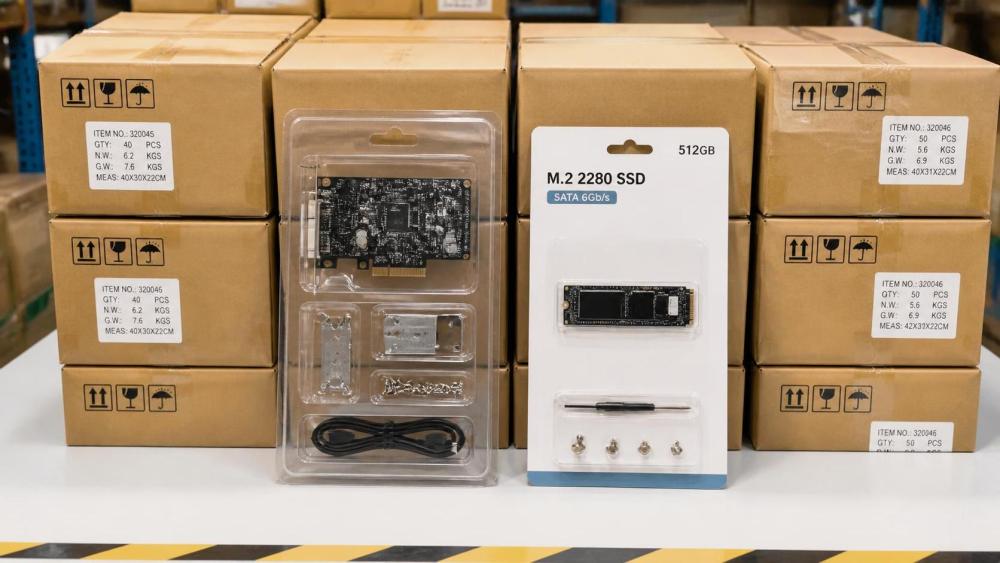
A blister pack generally uses a thermoformed plastic cavity attached to a backing card, film, foil, or another substrate. The cavity holds the item in place while the backing provides brand space, instructions, barcodes, and sometimes a hanging feature. Blister packaging can be simple and relatively material-efficient, particularly for products that have a flat profile or need only front-side protection.
A clamshell is typically a two-sided thermoformed package joined by a hinge. It encloses the product from both front and back, often with a snap closure, heat seal, weld, or a combination of closure methods. Some clamshells use an insert card, while others rely on printed labels or direct printing. The format can be designed with ribs, internal retaining features, and extra clearance around fragile edges.
This distinction affects more than visual presentation. A sealed blister pack relies substantially on the integrity of the bond between the cavity and the backing. A clamshell relies more on its formed structure, closure design, and resistance to opening under compression or impact. Neither is automatically stronger; the result depends on resin grade, gauge, cavity depth, support points, seal area, and the product’s own weight distribution.
A common sourcing mistake is comparing only the plastic thickness. A thinner package with well-placed ribs and close product support can outperform a thicker package with broad unsupported panels. Procurement specifications should therefore describe functional requirements, not merely nominal material gauge.
Where each format can reduce damage
Clamshell packaging usually has an advantage when the product needs all-around protection before it reaches the outer carton. Examples include irregular hardware assemblies, small devices with protruding controls, lighting components, bundled kits, and items that may shift or collide in mixed retail handling. A well-fitted clamshell can create a protected zone around the product, preventing direct contact between sensitive surfaces and adjacent packs.
The key phrase is well-fitted. An oversized clamshell can allow movement, which creates scuffing, cracked corners, or fatigue at a hinge point. It may also trap a product in a position that transfers shock directly to the most fragile component. If the item has a heavy metal body and a delicate plastic attachment, the retaining features should support the heavier mass without loading the weaker section.
Blister packaging is often effective for compact, stable products where the backing card can add stiffness and the cavity only needs to restrain the item. It can be a sensible choice for fasteners, replacement parts, batteries, small hand tools, flat accessories, and products that already have a resilient surface. When paired with an appropriately specified card, blister packaging can reduce bending or puncture risk while keeping the pack profile shallow.
However, traditional carded blisters have a familiar weak point: the interface between plastic and card. Humid storage conditions, poor sealing control, incompatible coatings, or excessive force during handling can compromise the bond. This does not make blister packaging unsuitable for international distribution, but it means the seal should be evaluated under conditions resembling the actual transport and storage route rather than only inspected at the factory.
The fulfillment-cost comparison is broader than pack price
A useful landed-cost review separates five cost drivers: packaging conversion, line labor, cube utilization, outer-carton consumption, and damage-related handling. Freight rates, channel requirements, returns practices, and warehouse automation can move the balance substantially.
Clamshells can increase dimensional cost when their depth prevents tight case packing. This is especially relevant in parcel networks, where freight calculations may reflect package dimensions as well as actual weight. A clamshell that protects the item but forces a larger shipping carton may be less economical than a blister pack combined with a well-designed corrugated mailer.
On the other hand, reducing package cube should not become the only target. A thin blister format that leads to product breakage, loose components, or retailer chargebacks can erase any freight saving. Procurement teams should ask suppliers to show how many retail packs fit per master carton, how the packs are oriented, what void fill is assumed, and whether the carton protects the vulnerable side of the retail package.
Sealing method can change the answer
The format name alone does not reveal the full operational burden. A face-seal blister, trapped blister, full-card blister, slide blister, snap-close clamshell, and heat-sealed clamshell can have very different labor, opening, and tamper-resistance characteristics.
Heat sealing may improve tamper evidence, but it introduces process variables: temperature, dwell time, pressure, tooling condition, card coating, and material compatibility. If the seal window is narrow, line variation can create either weak bonds or visual damage to the card. For high-volume programs, buyers should request a discussion of process controls, in-line inspection, and sample approval criteria rather than assuming a quoted sealing process will perform consistently.
Snap-close clamshells can reduce dependence on a card-to-plastic seal, but they may require a secondary label, tape, weld, or security feature if unauthorized opening is a concern. The pack must also remain practical for legitimate users. Difficult-to-open packaging generates complaints, product damage during opening, and sometimes returns. Accessibility and frustration-free opening deserve review early, not after the retail pack is approved.
Material and sustainability questions need a project-level answer
The sustainability discussion is frequently oversimplified. A plastic clamshell may use more material than a shallow blister, but a blister pack combines plastic with paperboard and sometimes adhesives or coatings. Recyclability depends on the specific polymer, the availability of local collection and sorting infrastructure, the ease of separating components, printed materials, labels, and the requirements of the destination market.
For many buyers, the better question is: can the packaging system achieve protection targets with less material, fewer mixed components, and fewer damaged goods? Damage has its own material footprint, as does repacking, reverse logistics, and disposal of unsellable inventory. A mono-material design may simplify end-of-life handling in some markets, but it must still meet strength, clarity, sealing, and product-safety needs.
Any environmental claim should be tied to documented material information and the applicable market rules. Terms such as “recyclable,” “recycled content,” and “plastic-free” can have specific legal or retailer-defined conditions. They should not be treated as generic marketing language in a procurement specification.
A practical way to make the selection
Before issuing a final purchase order, assess two or three candidate structures against the same brief. Include product dimensions and weight, fragile points, required shelf orientation, theft exposure, expected warehouse handling, master-carton configuration, shipping channel, and opening expectations. If the product is sold across multiple regions, include language space, labeling requirements, and local packaging obligations at the concept stage.
Then validate the packaging as a system. Review physical samples, pack-out instructions, carton drawings, pallet pattern, and transport assumptions together. Simple handling trials can reveal issues that flat artwork approvals cannot: a sharp flange catching on adjacent packs, a card corner bending during case insertion, a closure opening under compression, or a product shifting after repeated vibration.
For higher-risk goods, a documented transport test plan should reflect the expected distribution route and handling environment. The appropriate method depends on the channel and product category, so the test approach should be agreed with the packaging supplier, logistics team, and relevant retailer or customer requirements. Passing a generic test is less useful than demonstrating performance against the risks the product will actually face.
The decision in brief
Choose a clamshell when the product needs all-around protection, has an irregular form, contains multiple parts, or benefits from molded retention that prevents movement. It is often the safer starting point for fragile, high-touch, or visually sensitive items—provided its depth does not create avoidable freight and carton-cost penalties.
Choose blister packaging when the product is compact and stable, a backing card can provide needed information and stiffness, and a flatter format improves packing density without compromising the seal or exposing vulnerable areas. It can be particularly efficient for high-volume products where packing-line consistency and carton utilization have been validated.
At Global Supply Review, packaging comparisons are most useful when considered alongside the wider sourcing picture: component tolerances, factory process capability, master-carton design, shipping lane conditions, and destination-market expectations. The right clamshell vs. blister packaging choice is rarely a catalog decision. It is a controlled trade-off between protection, handling, cube, material complexity, and the cost of failure after the product leaves the factory.
Recommended News
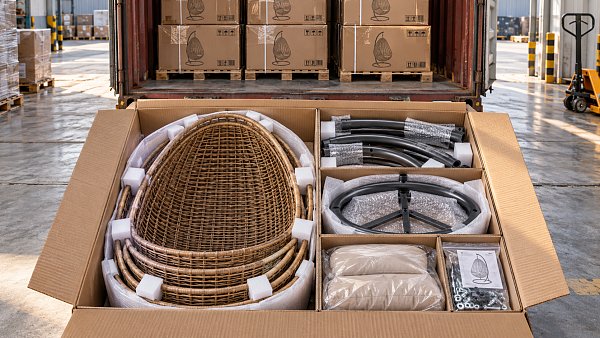
 Outdoor FurnitureHow packaging affects freight costs for wholesale wicker egg chairsExplore wicker egg chair wholesale packaging strategies to cut freight costs, improve container loading, and protect profits. Compare packing options for lower landed costs.Interior Sourcing LeadOct 19, 2026
 Supply Chain InsightsHow to use supply chain resilience metrics to assess recovery riskUse supply chain resilience metrics to compare recovery time, survival buffers, and financial exposure. Learn how to assess disruption risk and prioritize mitigation that protects service.Oct 18, 2026
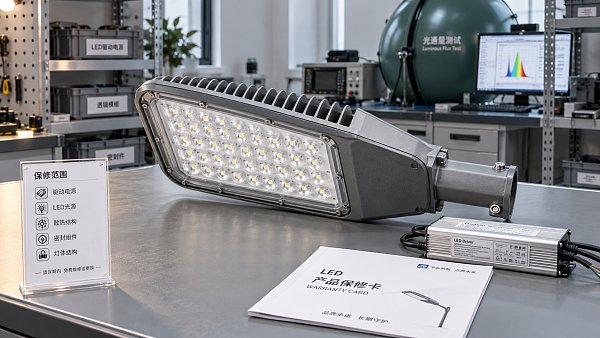
 Commercial LEDHow to assess an LED street light exporter’s warranty coverageAssess an led street lights exporter beyond warranty length. Learn how to verify coverage, uncover hidden costs, and negotiate stronger terms before you buy.Commercial Tech EditorOct 17, 2026
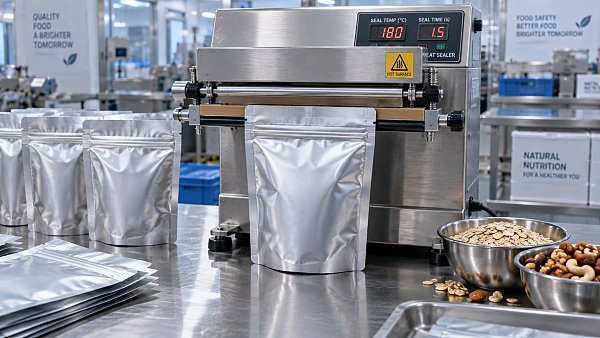
 Carton & PlasticsWhen should you heat seal aluminum foil zipper bags for food storage?When should you heat seal aluminum foil zipper bags? Learn when stronger closures matter, how to protect dry foods, and which sealing checks help ensure reliable storage.Packaging Supply ExpertOct 16, 2026