Industry News
Curation by industry experts
Hot Articles
Popular Tags
How to evaluate a commercial vacuum sealer manufacturer
How to Evaluate a Commercial Vacuum Sealer Manufacturer
Choosing a commercial vacuum sealer manufacturer is not a routine equipment purchase. The machine may sit at the end of a packing line, but its performance affects product shelf life, pack presentation, food-safety controls, labor rhythm, film consumption, and the cost of dealing with failed seals. A low initial quotation can look attractive until a plant is losing packs to inconsistent vacuum levels, waiting weeks for a heater bar, or discovering that its preferred pouch material does not seal reliably.
For procurement teams sourcing across borders, the central question is not simply whether a supplier can make a chamber sealer or continuous belt vacuum machine. It is whether that supplier can repeatedly build the right machine for the intended product, support it after shipment, and communicate clearly when operating conditions change. That distinction matters in food processing, central kitchens, meat and seafood packing, medical-related packaging, industrial parts protection, and private-label contract packing, where “vacuum sealing” can mean very different things.
A sound review starts with the application, then works backward into manufacturing capability. This is the approach often needed when comparing equipment suppliers across broader packaging supply chains: product requirements, consumable materials, plant utilities, documentation, spare parts, and export service all need to line up. Looking at only the machine specification sheet leaves too much risk unexamined.
Define the operating job before comparing factories
A commercial vacuum sealer is not one product category in practice. A compact single-chamber unit for a restaurant, a double-chamber machine for batch food production, a nozzle-type unit for bulky bags, a thermoforming line, and a belt vacuum sealer for high-throughput pouches are built around different production assumptions. Comparing them on pump size or quoted cycle time alone is misleading.
Before approaching any commercial vacuum sealer manufacturer, prepare a short application brief. Include the product type, dimensions and weight, expected daily volume, pouch construction, desired headspace, target seal width, cleaning conditions, available electrical supply, compressed-air availability if applicable, and the line layout. For food applications, state whether the product is dry, chilled, frozen, moist, oily, sharp-edged, or likely to release liquid during evacuation. These details influence chamber dimensions, pump selection, seal-bar design, and the need for gas flushing or liquid-control features.
The product itself often exposes the weak point. A dry coffee pouch may run well on equipment that struggles with wet marinated meat. Fine powders can be drawn toward the vacuum system. Sharp hardware components can puncture film unless the bag and handling method are reconsidered. In each case, the manufacturer should ask probing questions rather than immediately offering its standard model.
Assess sealing performance, not just the claimed vacuum level
Buyers naturally focus on vacuum pump capacity, but the seal is usually where packaging failure becomes visible. A pack can look acceptable when it leaves the machine and still fail later because of contamination in the seal area, uneven heat transfer, poor cooling, incorrect dwell settings, or incompatible film layers.
Ask the supplier how it validates sealing performance for the proposed pouch material. A useful answer should cover more than “we test every machine.” It should explain what samples are needed, whether trials are conducted with the buyer’s actual product and bags, how seal parameters are adjusted, and what acceptance criteria can be documented before shipment. If the supplier cannot receive product samples, it should be candid about the limits of an empty-bag demonstration.
The conversation should also separate final vacuum from evacuation speed. A large chamber may reach a strong vacuum level but still produce an unacceptable cycle time if the product load is substantial or the chamber is repeatedly opened and closed by hand. Conversely, running a pump aggressively to shorten cycles can be a poor trade-off for fragile products, liquids, or delicate pack appearance. The right operating window is application-specific.
Look inside the manufacturer’s production system
A polished catalogue says little about how a machine is actually assembled. The procurement task is to understand which parts are made in-house, which are sourced, how incoming components are checked, and whether the manufacturer can maintain the same build quality over repeated orders. This is particularly important when a buyer intends to standardize equipment across multiple sites or sell it under a private label.
During a factory audit or remote review, look beyond the showroom. Ask to see fabrication, welding, assembly, electrical wiring, testing, packing, and spare-parts storage. A manufacturer does not need to produce every component internally to be dependable. In fact, specialized purchased components may be sensible. What matters is traceability, supplier control, and whether substitutions are managed rather than quietly made when a component becomes unavailable.
Pay attention to the quality of technical communication. Can the team explain why a particular chamber depth, seal-bar length, or pump arrangement is recommended? Are drawings revision-controlled? Can it provide a clear bill of materials for wear items? Vague answers at the quotation stage usually become more costly once the machine has been shipped.
Treat material compatibility as a joint packaging decision
The machine and pouch cannot be sourced in isolation. Commercial vacuum sealers are commonly used with multilayer flexible packaging, but film thickness, barrier requirements, inner sealing layer, bag surface texture, and dimensions all influence the result. A machine that performs well with one supplier’s bag may need different settings for another bag that appears similar on paper.
This matters even more when a business is moving toward recycled-content, downgauged, compostable, or otherwise redesigned packaging. Sustainability claims do not automatically translate into process compatibility. Any material change should trigger a controlled trial covering seal appearance, seal strength where relevant, product protection, and line speed. A responsible equipment manufacturer will collaborate with the packaging converter or at least specify the material limits it has validated.
For buyers operating in regulated food or export markets, compliance requests should be precise. Rather than asking a generic question such as “Do you have all certificates?”, identify the applicable destination-market requirements and ask for current documentation relevant to the equipment and intended use. Electrical conformity, food-contact material declarations, hygiene expectations, and labeling obligations can vary by country and application. Documentation should be reviewed by the buyer’s compliance team or local advisor, not accepted as a marketing attachment.
Verify capacity, lead times, and customization discipline
Many suppliers can build a sample unit; fewer can manage a rolling order schedule without changing lead times, components, or finishing quality. Ask about normal production flow, peak-season constraints, capacity planning, and the distinction between standard machines and engineered variants. A custom chamber size, non-standard voltage, special control language, or modified loading system may require more than a simple configuration change.
Customization is useful when it solves a real operating problem. It is less useful when it creates a one-off machine that no technician can support later. Good examples include adapting chamber dimensions to a verified bag size, adding a controlled gas-flush function where the pack format requires it, integrating a discharge conveyor, or configuring electrical components for the site standard. Less convincing changes are cosmetic modifications that obscure an unproven base design.
For a private-label program, clarify ownership of artwork, manuals, nameplates, packaging, and technical files. Also confirm whether the manufacturer has a process for approving changes. A buyer should not discover after delivery that a control component, pump model, or cabinet layout has changed without notice.
Make factory acceptance testing part of the purchase decision
The best time to resolve a performance dispute is before final payment and shipment. A factory acceptance test should be tied to the agreed configuration, using the buyer’s packaging material and, where feasible, representative product. The test does not need to be unnecessarily elaborate, but it should check the functions that matter: vacuum cycle, sealing consistency, control settings, safety functions, gas flushing if specified, and general finish.
Define the evidence in advance. This may include photos or video, a signed test record, serial-number identification, electrical configuration confirmation, and a packing list of included accessories. If remote witnessing is used, agree on the test sequence rather than relying on a short promotional video. The point is not distrust; it is avoiding ambiguity between the approved sample and the shipped machine.
After-sales support is where sourcing risk becomes visible
Commercial vacuum sealing equipment contains consumable and serviceable elements: sealing wires or strips, tape, lids and gaskets, valves, electrical parts, and pump-service items. These are not minor details. A production site may tolerate a machine outage for a few hours; it may not tolerate an extended wait for a small component that was never included in the initial spare-parts plan.
Ask the manufacturer for a recommended commissioning and two-year spare-parts list, then compare it with the maintenance capability at the destination site. Clarify response channels, technical support hours, training format, warranty boundaries, and whether troubleshooting can be performed through drawings, videos, and remote diagnostics. For equipment moving through distributors, determine who owns first-line support and who has authority to approve warranty replacements.
A supplier that provides a clear manual, parts drawings, wiring documentation, troubleshooting logic, and realistic maintenance instructions may be a safer choice than one offering a cheaper unit with little service structure. This is especially true for multi-country procurement, where the importer may become the effective service provider.
Compare total operating fit, not the lowest landed price
A final comparison should include machine price, freight, duties where applicable, installation needs, packaging trials, spare parts, operator training, maintenance burden, expected energy use, and the financial impact of rejected packs or avoidable downtime. Exact lifecycle costs depend on local labor rates, product volumes, and maintenance practices, so they should not be guessed. But the categories should be visible in the sourcing decision.
Global Supply Review tracks a broad set of sourcing questions across packaging, light manufacturing, and related supply networks. One recurring lesson is that reliable procurement comes from connecting the equipment decision to its surrounding system. The vacuum sealer, the pouch converter, the food-safety team, the maintenance crew, and the export documentation process all influence the result.
The strongest commercial vacuum sealer manufacturer is rarely the one that promises every feature at the fastest price. It is the one that understands the product being packed, makes its technical limits clear, demonstrates the agreed performance, controls changes during production, and remains reachable when the first real production issue appears. That is the standard worth building into a supplier evaluation.
Recommended News
 Commercial LEDHow to assess an LED street light exporter’s warranty coverageAssess an led street lights exporter beyond warranty length. Learn how to verify coverage, uncover hidden costs, and negotiate stronger terms before you buy.Commercial Tech EditorOct 17, 2026
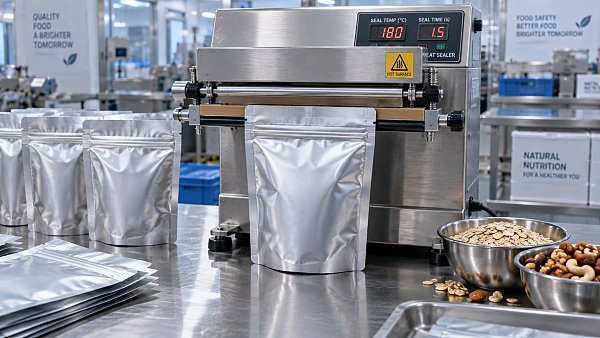
 Carton & PlasticsWhen should you heat seal aluminum foil zipper bags for food storage?When should you heat seal aluminum foil zipper bags? Learn when stronger closures matter, how to protect dry foods, and which sealing checks help ensure reliable storage.Packaging Supply ExpertOct 16, 2026
 Supply Chain InsightsHow to find a custom-printed ring-pull can supplier for small ordersFind a custom printed ring pull cans supplier for small orders. Compare MOQs, printing options, samples, and delivered costs to launch confidently without excess inventory.Oct 15, 2026
 Household Tissue & Hygiene PackagingCan Household Tissue Packaging Be Fully Compostable?Can household tissue packaging be made fully compostable? Explore certified materials, home vs. industrial composting, and practical sourcing tips to choose the right pack.Packaging Supply ExpertOct 14, 2026