Industry News
Curation by industry experts
Hot Articles
Popular Tags
What Is Bamboo Blend Fabric? Performance, Uses, and Fiber Ratio Basics
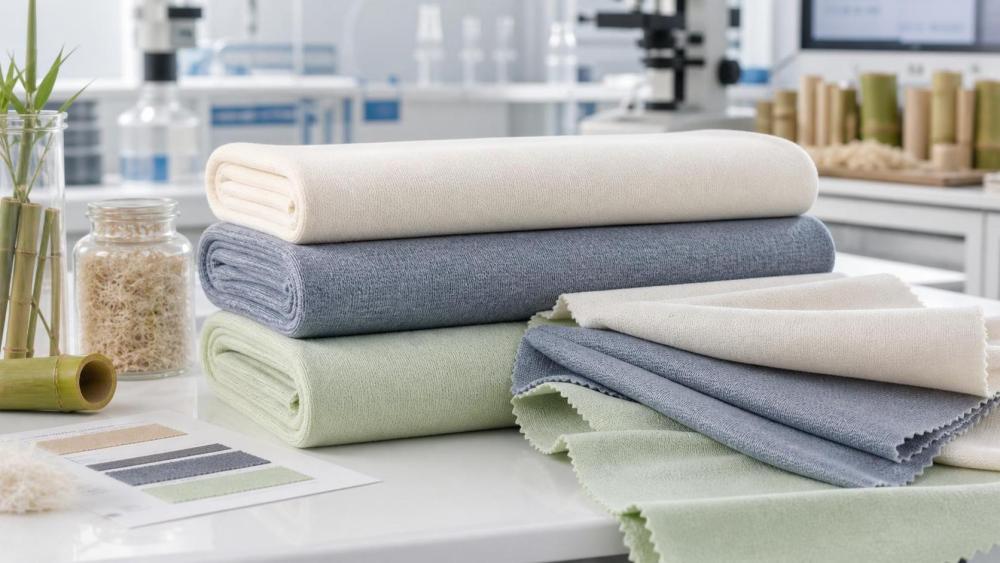
A bamboo blend is not one single fabric category. It is a family of textiles made by combining bamboo-derived fiber with another fiber such as cotton, polyester, linen, nylon, wool, or elastane. The point of blending is practical: few fibers are ideal in every respect. A blend can make a soft bamboo-based fabric more stable, give it stretch, reduce drying time, improve abrasion resistance, or bring the cost closer to a target market.
That sounds straightforward, but the term can hide a great deal. Two fabrics both described as “bamboo blend” may feel completely different in the hand, behave differently after repeated laundering, and make very different environmental claims. For designers, sourcing teams, and researchers, the useful question is not simply whether bamboo is present. It is: what kind of bamboo-derived fiber is used, what is it blended with, and why?
What “bamboo” usually means in fabric specifications
In commercial textile supply, bamboo fabric is commonly made from regenerated cellulose. Bamboo pulp is processed into a cellulosic fiber, often described in specifications as bamboo viscose, bamboo rayon, or bamboo lyocell depending on the production route and the supplier’s terminology. These should not be treated as interchangeable labels without checking the technical documentation.
Bamboo viscose and bamboo rayon generally refer to regenerated cellulosic fibers produced through chemical processing. Bamboo lyocell is also regenerated cellulose, but it is made through a different solvent-based process. A buyer evaluating sustainability claims should look beyond the botanical source. The source of the pulp, chemical management, wastewater treatment, traceability, and relevant third-party documentation all matter. “Made from bamboo” alone does not describe the full manufacturing impact.
In the market, bamboo-derived fibers are valued for a smooth, cool-touch surface and a soft drape. They are often selected for next-to-skin products, where comfort matters more than crisp structure. On their own, however, regenerated cellulosic fibers may not provide the shape retention, strength, or drying behavior required for every product category. That is where a bamboo blend becomes useful.
Why fiber ratios change the fabric so much
The fiber percentage on a label is not a minor detail. It is one of the clearest clues to how a textile is likely to perform. A fabric containing a small amount of bamboo-derived fiber may gain a softer hand without changing its core behavior. A fabric with bamboo as the dominant component will usually feel and drape more like a regenerated cellulosic textile, while the secondary fiber provides targeted support.
Consider a bamboo-cotton jersey. Cotton can add familiar comfort, easier processing for many mills, and a more matte, natural-looking surface. Bamboo-derived fiber can add fluidity and softness. The result is often suitable for T-shirts, underwear, sleepwear, babywear, and casual loungewear. Yet the final result still depends on yarn count, knit construction, fabric weight, finishing, and dyeing. A loose single jersey and a compact interlock made from the same nominal fiber ratio will not wear alike.
In bamboo-polyester blends, polyester is usually introduced to improve durability, dimensional stability, wrinkle recovery, or faster drying. This can be a sensible choice for uniforms, active basics, socks, bedding, and travel-oriented apparel, particularly when the product needs to tolerate more frequent washing. The trade-off is that the fabric may lose some of the natural, relaxed drape associated with a high-cellulosic blend. It may also require a different end-of-life discussion because mixed fibers are harder to separate and recycle than a single-fiber textile.
Elastane is usually present in relatively low proportions, but it can have an outsized effect. A bamboo blend with elastane may be selected for leggings, fitted underwear, rib knit tops, socks, or stretch sheets because recovery matters as much as softness. The important sourcing question is not only “does it stretch?” but “does it recover after repeated wear and washing?” Stretch growth, seam appearance, and fabric bagging should be checked through actual sample testing rather than assumed from the composition line.
Common bamboo blend combinations and realistic uses
There is no universal best formula. The appropriate blend depends on the garment, the expected wash cycle, climate, price point, and whether the product is intended to look crisp, relaxed, technical, or luxurious.
Bamboo-linen constructions deserve particular attention because they are sometimes expected to behave like a very soft linen. In reality, the fabric can still wrinkle and retain visible texture, especially in woven constructions. That can be an advantage in resort wear or relaxed home décor, but it may disappoint a buyer expecting a smooth office shirt. Fabric samples should be evaluated after washing, not just off the cutting table.
Comfort and moisture management: useful, but easy to overstate
Bamboo blends are frequently marketed as breathable, moisture-wicking, temperature regulating, or naturally antibacterial. Some of these descriptions can become too broad once they reach retail copy. Fabric comfort is influenced by far more than fiber content: yarn twist, filament versus staple form, knit or weave density, surface finish, garment fit, and local climate all change the wearer’s experience.
Cellulosic fibers can absorb moisture, which may contribute to a comfortable feel in some end uses. But absorption is not the same as rapid evaporation, and a fabric that feels pleasant in a lightweight T-shirt may not be the right choice for a high-output sports garment. Polyester can support faster drying in a blend, while a tighter construction can reduce air permeability. There is always a balance.
Claims about antimicrobial performance need especially careful review. Any claim of lasting antibacterial or odor-control performance should be supported by the specific finished fabric, its treatment if one is used, and the applicable rules in the intended sales market. It should not be inferred simply because bamboo is part of the raw material story.
The sourcing questions that prevent expensive surprises
A composition label is only the start of technical evaluation. In textile procurement, a bamboo blend that passes an initial hand-feel review can still create problems in bulk production if the specification is vague. This is particularly common with soft knit fabrics, where one approved swatch may not capture variation in weight, width, shrinkage, or surface appearance.
Before approving a material, it is sensible to clarify the exact generic fiber description, the declared percentages, fabric construction, weight, usable width, color standard, and finishing process. Ask whether the fabric is yarn-dyed, piece-dyed, brushed, enzyme-washed, silicone-softened, anti-pilling treated, or mechanically compacted. These details affect both performance and the consistency of future replenishment orders.
Care testing should reflect the actual product. A premium duvet cover, a children’s bodysuit, and a hotel-uniform polo face different risks. For apparel, teams commonly review dimensional change, pilling, seam slippage where relevant, colorfastness, spirality in knits, and appearance after repeated laundering. The test methods and pass/fail thresholds should be agreed within the project specification, particularly when goods will be sold across markets with different customer expectations.
It also pays to request a realistic bulk-lot sample when timing allows. Laboratory dips and development yardage can look excellent while bulk fabric shows a different softness or width. This is not necessarily a supplier failure; it is often a consequence of scale, finishing conditions, and normal process variation. Clear tolerances and pre-production approval reduce the chance that “soft bamboo blend” becomes an argument rather than a shared specification.
How to assess sustainability claims without reducing them to a slogan
Bamboo has an appealing public image because it is fast-growing and renewable. That origin can be relevant, but it is not enough to establish the environmental profile of a finished fabric. Regenerated bamboo fiber involves conversion from plant material into spinnable cellulose. The environmental assessment should therefore include sourcing practices, processing chemistry, energy use, water management, dyeing and finishing, and the blend’s eventual recyclability.
For brands with formal environmental or social compliance requirements, documentation should match the claim being made. Depending on the program and market, this may include fiber-content verification, chemical-management information, chain-of-custody records, restricted-substance compliance, or recognized textile certification documentation. No document should be assumed to cover every claim. A certificate may apply to a facility, a material stream, a transaction, or a particular production standard, and its scope needs to be checked.
The blending decision itself has consequences. Adding recycled polyester may support a durability or recycled-content objective, but creates a mixed-fiber product. Adding elastane can improve fit and extend useful wear life, yet may complicate recycling further. There is no clean answer that applies to every program. The more credible approach is to state what the fabric is, what evidence supports the claim, and what limitations remain.
A practical way to compare bamboo blend options
When several materials appear similar on paper, begin with the end-use failure you are trying to avoid. Is the concern shrinkage after home washing? A uniform that feels too warm? Leggings that lose recovery? A bedsheet that pills? This usually leads to a better decision than beginning with a desired fiber percentage.
Then compare equivalent samples: similar fabric weight, construction, color, and finish. A heavy bamboo-cotton interlock should not be judged against a lightweight bamboo-polyester jersey as though fiber content were the only variable. Handle both dry and after laundering. Stretch them if the garment will stretch. Examine the surface under ordinary light, not only showroom lighting. Small details—edge curl, sheerness, snag resistance, or a finish that washes away quickly—often matter more to the eventual customer than a compelling raw-material story.
For procurement teams working across textile, packaging, hardware, lighting, and furnishings supply chains, this type of comparison is part of a broader sourcing discipline: claims should connect to specifications, and specifications should connect to the intended use. Global Supply Review approaches material intelligence from that practical angle, where fiber narratives, manufacturing constraints, compliance records, and product performance need to align rather than sit in separate documents.
A bamboo blend can be an excellent material choice when softness, drape, and comfort are priorities and the companion fiber is selected for a clear reason. The safest buying decision is rarely based on the word “bamboo” alone. It comes from confirming the actual fiber composition, construction, finish, wash performance, and evidence behind any sustainability claim before the fabric moves into bulk production.
Recommended News
 Home DecorHow order size affects wholesale prices for round linen tableclothsBuying round linen tablecloths wholesale? Discover how order size, freight, and inventory costs affect pricing—and choose the right quantity to maximize real savings.Interior Sourcing LeadOct 14, 2026
 Outdoor FurnitureHow to verify outdoor furniture manufacturers' production capacityCan outdoor furniture manufacturers deliver on time? Learn how to verify production capacity, uncover bottlenecks, and validate supplier commitments before placing your next order.Interior Sourcing LeadOct 13, 2026
 Commercial DisplaysWhat makes an outdoor digital signage display manufacturer reliable?Discover how to choose a reliable outdoor digital signage display manufacturer with proven weather protection, quality control, smart visibility, and responsive after-sales support.Commercial Tech EditorOct 12, 2026
 Garment MfgWhen do bulk embroidered hoodies offer better value than printed ones?Bulk embroidered hoodies deliver lasting value for uniforms and premium branding. Compare durability, design, comfort, and cost to choose the right decoration.Textile Industry AnalystOct 11, 2026