Industry News
Curation by industry experts
Hot Articles
Popular Tags
Shanghai Wedding Imaging Expo 2026 Adds Textile Machinery Tech Zone
From September 10–13, 2026, the Shanghai Wedding Imaging Expo will introduce its first dedicated ‘Textile Machinery for Bridal Apparel’ technology matching zone — a development signaling growing integration between advanced textile manufacturing equipment and the global bridal apparel supply chain. This initiative is particularly relevant for textile machinery suppliers, bridal garment manufacturers, international importers, and technical procurement teams operating across Southeast Asia, the Middle East, and Latin America.
Event Overview
The Shanghai Wedding Imaging Expo 2026 will be held from September 10 to 13, 2026. For the first time, the event will feature a specialized ‘Textile Machinery for Bridal Apparel’ technology matching zone. The zone will spotlight niche equipment categories including digital textile printers for bridal fabrics, intelligent cutting tables, and waterless dyeing systems. Twelve confirmed exhibitors include Küsters (Germany), Brother (Japan), and Hengtian Heavy Industry (China). A dedicated B2B procurement negotiation schedule will be available, with pre-registration open to bridal apparel importers from Southeast Asia, the Middle East, and Latin America.
Impact on Specific Industry Segments
Direct Trade Enterprises (e.g., regional bridal apparel importers)
These companies face evolving sourcing expectations as digital printing and sustainable dyeing technologies reshape fabric lead times, customization capabilities, and compliance requirements. The new zone offers direct access to equipment vendors — potentially enabling tighter coordination between importers and upstream production partners, especially where speed-to-market or eco-certification is a competitive differentiator.
Raw Material Procurement Teams (e.g., fabric buyers at bridal brands)
Procurement functions may encounter shifting specifications: digitally printed lace or tulle requires different substrate testing protocols than conventionally dyed materials; waterless dyeing compatibility affects fiber blend selection. Exposure to integrated machinery solutions could influence future material qualification criteria and supplier evaluation frameworks.
Apparel Manufacturing & Contract Production Firms
Manufacturers serving bridal brands may need to assess whether in-house adoption of smart cutting or low-impact dyeing systems improves responsiveness to small-batch, high-variability orders. The zone provides a venue to benchmark equipment performance, maintenance demands, and operator training requirements — factors that directly affect unit cost and scalability.
Supply Chain Service Providers (e.g., logistics, certification, after-sales support)
Equipment deployment outside core manufacturing hubs often triggers demand for localized technical service, spare parts logistics, and regulatory documentation (e.g., CE, CCC, or regional environmental certifications). The targeted outreach to importers from emerging markets suggests potential growth in cross-border support services tied to machinery installation and commissioning.
What Relevant Companies or Practitioners Should Monitor and Do Now
Confirm eligibility and deadlines for B2B negotiation slots
Pre-registration for procurement sessions is open to qualified importers — but availability and qualification criteria (e.g., minimum annual import volume, business license verification) have not been publicly detailed. Interested parties should monitor official registration channels for cutoff dates and documentation requirements.
Map equipment capabilities to current production bottlenecks
Rather than evaluating machinery generically, firms should identify one or two specific constraints — such as inconsistent color matching on delicate fabrics, high waste rates during lace nesting, or difficulty meeting EU Eco-label thresholds — and use the zone to assess vendor-specific responses to those issues.
Verify compatibility with existing infrastructure and standards
Digital printers and smart cutters require stable power supply, data integration (e.g., CAD/PDM systems), and space planning. Attendees should prepare technical questions on connectivity protocols, software localization, and post-installation calibration support — especially if deploying outside China or in regions with limited local engineering resources.
Track whether the zone evolves into a recurring feature
This is the inaugural edition of the textile machinery zone. Its retention and expansion in 2027 will depend on participation quality and buyer engagement metrics — observable only after the 2026 event concludes. Stakeholders should treat this year as a pilot for assessing long-term relevance.
Editorial Observation / Industry Perspective
Observably, this initiative reflects a structural shift: bridal apparel is no longer treated solely as a design- and marketing-led category, but increasingly as a technical textile application requiring precision machinery integration. Analysis shows the zone is less a standalone trade show addition and more a deliberate bridge between two historically separate exhibition ecosystems — wedding imaging (focused on photography, styling, retail presentation) and industrial textile engineering. It does not yet indicate widespread adoption of these technologies across the bridal supply chain, but rather signals early-stage alignment efforts among equipment makers seeking new verticals and downstream users exploring efficiency levers beyond labor cost. From an industry perspective, the value lies not in immediate procurement outcomes, but in clarifying which technical capabilities are being prioritized by both suppliers and regional buyers — a useful signal for R&D roadmaps and capacity planning.
Shanghai Wedding Imaging Expo 2026’s introduction of a textile machinery tech zone marks a modest but meaningful step toward functional convergence in the bridal apparel value chain. It is best understood not as an industry-wide inflection point, but as an early indicator of how equipment innovation is beginning to intersect with niche fashion segments — one that merits attention primarily for its diagnostic value in identifying emerging technical priorities and regional procurement intent.
Source Attribution:
Main source: Official announcement from Shanghai Wedding Imaging Expo organizing committee (2024–2025 pre-release communications).
Note: Details regarding exact booth allocations, full exhibitor list beyond the 12 named, and post-event evaluation metrics remain pending confirmation and will require follow-up observation.
Recommended News
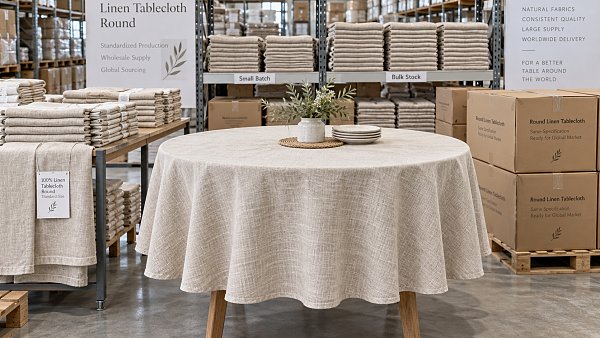
 Home DecorHow order size affects wholesale prices for round linen tableclothsBuying round linen tablecloths wholesale? Discover how order size, freight, and inventory costs affect pricing—and choose the right quantity to maximize real savings.Interior Sourcing LeadOct 14, 2026
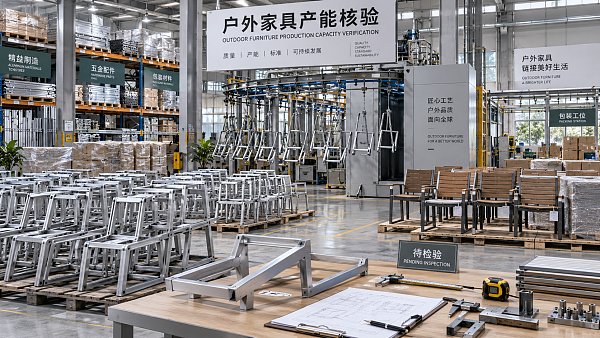
 Outdoor FurnitureHow to verify outdoor furniture manufacturers' production capacityCan outdoor furniture manufacturers deliver on time? Learn how to verify production capacity, uncover bottlenecks, and validate supplier commitments before placing your next order.Interior Sourcing LeadOct 13, 2026
 Commercial DisplaysWhat makes an outdoor digital signage display manufacturer reliable?Discover how to choose a reliable outdoor digital signage display manufacturer with proven weather protection, quality control, smart visibility, and responsive after-sales support.Commercial Tech EditorOct 12, 2026
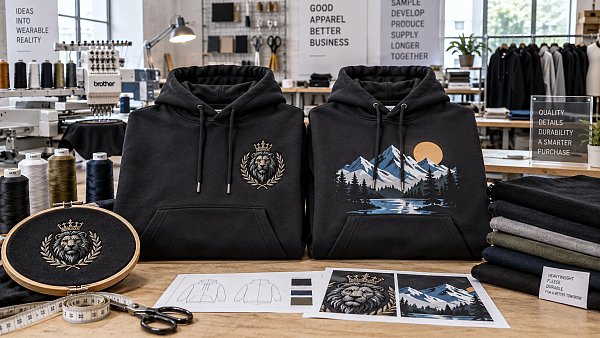
 Garment MfgWhen do bulk embroidered hoodies offer better value than printed ones?Bulk embroidered hoodies deliver lasting value for uniforms and premium branding. Compare durability, design, comfort, and cost to choose the right decoration.Textile Industry AnalystOct 11, 2026