Industry News
Curation by industry experts
Hot Articles
Popular Tags
What is the softest cotton for baby clothes after repeated washing?
What is the softest cotton for baby clothes after repeated washing?
A baby outfit can feel wonderfully soft in the store, but will it stay that way after dozens of washes? If you’re wondering, “what is the softest cotton for baby clothes?” the answer depends on more than a cotton label. Long-staple varieties such as Pima and Egyptian cotton are strong contenders, but yarn quality, fabric construction, and laundry habits also influence lasting softness.
For everyday baby clothes, a well-made, combed extra-long-staple cotton knit—particularly Pima or Supima—is a strong starting point. Verified long- or extra-long-staple Egyptian cotton can also be an excellent choice. However, no cotton name guarantees the softest garment after washing. A carefully made standard cotton bodysuit can outperform a poorly constructed premium one.
The useful comparison is not simply “Which cotton sounds most luxurious?” It is “Which garment stays smooth, flexible, and comfortable under the washing routine this household actually uses?”
Why longer cotton fibers usually help softness last
Cotton staple length describes the length of its individual fibers. Longer fibers can be spun into smooth, strong yarns with fewer exposed fiber ends. That matters because loose ends can contribute to fuzz, surface friction, and pilling as garments rub against other clothes during wear and washing.
This does not mean long-staple cotton cannot pill or become rough. Yarn twist, spinning quality, knitting, finishing, and laundering still matter. It means the manufacturer has a better starting material for producing a smooth fabric that withstands use.
“Combed” is another useful detail. Combing removes some shorter fibers and helps align the remaining fibers before spinning. Combed cotton often feels smoother than otherwise comparable carded cotton. Ring-spun yarn can also be a useful quality clue, although neither term alone predicts how a finished outfit will perform.
Be cautious with descriptions such as “cloud soft” or “luxury touch.” A finishing treatment can create an appealing first impression without telling you much about the fabric underneath. Some of that initial softness may diminish in laundering. The real test begins after the first few washes.
Pima, Supima, Egyptian, or organic: what should you choose?
These labels describe different things, so they should not be treated as interchangeable quality grades.
For a frequently washed bodysuit, Pima or Supima is worth considering when the price difference is manageable. For a large rotation of nursery basics, good combed cotton may offer better value. Babies outgrow clothes quickly, so buying fewer premium pieces is not always more practical than having enough reliable basics for regular changes.
Organic cotton can be the right choice when verified production practices matter to you. Just separate that decision from softness. Neither organic certification nor a harmful-substance testing label establishes that a fabric will feel softer after repeated washing.
The knit can matter as much as the cotton name
Two outfits made from the same cotton can feel noticeably different. A lightweight jersey drapes easily; interlock usually feels fuller and has smooth surfaces on both sides. Rib knit stretches readily, making it useful for neck openings and fitted garments. None is automatically best for every baby or season.
For cooler conditions, a smooth interlock bodysuit can provide a cushioned feel without relying on a fuzzy surface. In warm weather, lighter jersey may be more comfortable. Thick fabric can feel luxurious in your hand but be unnecessary for a baby already wearing several layers.
Brushed cotton deserves closer inspection. Brushing raises fibers to create a cozy surface, but that surface may change with friction and washing. It is not inherently poor quality; it simply should not be judged by its new-garment feel alone.
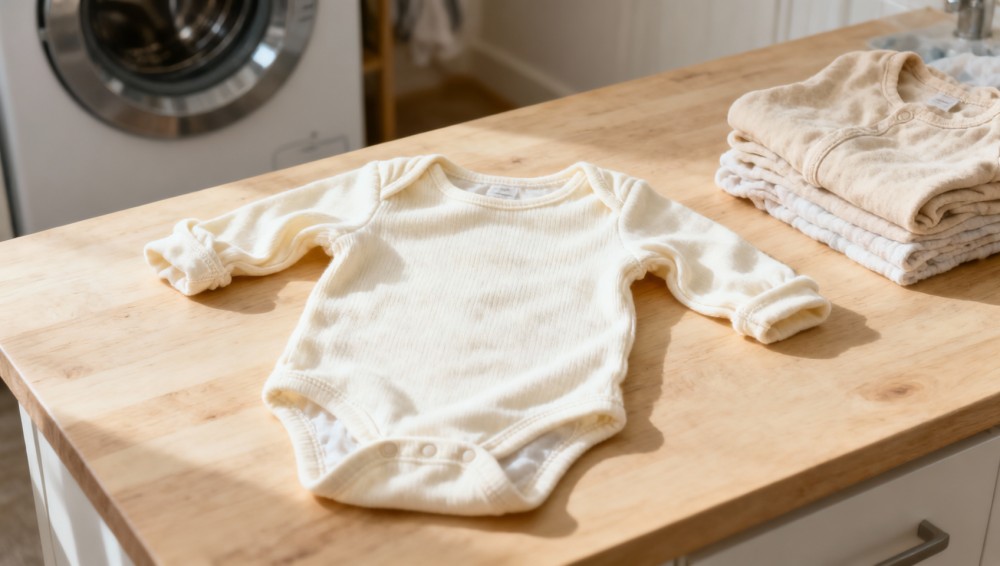
Turn the garment inside out before deciding. Run a finger along the shoulder seams, underarm joins, neckline, and snap backing. A wonderfully soft fabric does little to compensate for stiff embroidery backing against the chest or a bulky seam pressing into a fold of skin.
A small amount of elastane can improve fit and recovery in some garments. That is a different benefit from softness, and it brings its own care requirements. If you want pure cotton, check the full composition rather than assuming “cotton-rich” means 100% cotton.
How to judge clothes before committing to a full set
The supply-chain perspective used by Global Supply Review (GSR) is useful even for a small household purchase: translate an attractive material claim into details you can check. For baby clothes, those details are fiber content, construction, finishing, and performance after laundering—not the prestige of the product name.
When shopping online, look for reviews that describe the same item after several washes. “So soft when it arrived” is less informative than comments about a neckline becoming wavy, cuffs turning stiff, or the fabric staying smooth. Reviews are anecdotal, but recurring observations can flag questions worth asking.
If you plan to buy a multipack or build a wardrobe around one brand, purchase a single item first. Wash it according to its label using your normal detergent and drying method. Compare the following once it is completely dry:
- Does the inside still feel smooth, especially across the torso?
- Are there new pills or concentrated fuzz under the arms?
- Has shrinkage made the neck opening or leg openings uncomfortable?
- Do seams twist, and do cuffs recover after a gentle stretch?
- Is the fabric merely less slippery, or has it become genuinely coarse?
That last distinction matters. Losing a surface finish does not necessarily mean the garment has failed. Persistent roughness, excessive distortion, or uncomfortable openings are more meaningful reasons not to buy more.
Why good cotton sometimes feels stiff after washing
Before blaming the cotton, consider the laundry routine. Detergent residue, mineral deposits from hard water, and drying conditions can all affect the hand of a fabric. More detergent does not automatically produce cleaner, softer baby clothes.
Use the detergent dose appropriate to the load, soil level, water hardness, and product instructions. Avoid overfilling the machine, which can limit movement and rinsing. An extra rinse may help when residue is suspected, but it is not a substitute for correct dosing.
Line-dried cotton can feel firmer than tumble-dried cotton because the fibers dry without the same mechanical movement. That does not necessarily indicate damage. If the care label permits, a brief low-heat tumble can help loosen the fabric; remove it promptly rather than continuing to dry it after it is already dry.
Repeated high heat can contribute to shrinkage and wear, particularly around elasticated areas. Wash soft basics away from rough towels, exposed hook-and-loop fasteners, and other abrasive items where practical. Close fasteners and follow garment-specific instructions.
Fabric softener can change how cotton feels, but it should not be needed to make a good garment wearable. It may also leave residues or affect absorbency. Check restrictions on sleepwear and treated fabrics, and do not use fragranced products to disguise persistent roughness.
Softness is not the same as skin compatibility
For a baby with sensitive skin, smooth fabric and comfortable seams are sensible priorities. But “soft,” “organic,” and “hypoallergenic” should not be read as guarantees against irritation. Fragrance, detergent residue, heat, moisture, and friction can also be relevant.
Wash new clothes before use according to their labels. Choose a comfortable fit rather than assuming tighter clothing is gentler because it moves less. For sleepwear, also follow applicable safety guidance and the garment’s fit instructions; softness should not override those requirements.
If a rash persists, seek advice from a pediatric clinician rather than repeatedly changing cotton varieties. A higher-priced fabric is not a treatment for eczema or another skin condition.
The most practical buying decision
Choose combed Pima or Supima in a smooth knit when you want a strong candidate for lasting softness and the garment fits your budget. Consider Egyptian cotton when the seller provides meaningful fiber details, not just an origin-based luxury claim. Choose well-made combed standard cotton when availability, easy care, and a generous rotation matter more than a premium label.
The deciding step is simple: buy one, wash it as you will actually wash the rest, and inspect the inside. If it remains smooth, holds its shape, and has comfortable seams without needing softener, you have better evidence than any promise on the hangtag.
Recommended News
 Commercial LEDHow to assess an LED street light exporter’s warranty coverageAssess an led street lights exporter beyond warranty length. Learn how to verify coverage, uncover hidden costs, and negotiate stronger terms before you buy.Commercial Tech EditorOct 17, 2026
 Carton & PlasticsWhen should you heat seal aluminum foil zipper bags for food storage?When should you heat seal aluminum foil zipper bags? Learn when stronger closures matter, how to protect dry foods, and which sealing checks help ensure reliable storage.Packaging Supply ExpertOct 16, 2026
 Supply Chain InsightsHow to find a custom-printed ring-pull can supplier for small ordersFind a custom printed ring pull cans supplier for small orders. Compare MOQs, printing options, samples, and delivered costs to launch confidently without excess inventory.Oct 15, 2026
 Fabrics & YarnsWhich Sustainable Fabrics Are Most Accepted by EU Apparel Brands?Which sustainable fabrics are most accepted by EU apparel brands? Explore top materials, certification requirements, and sourcing tips to build a buyer-ready fabric shortlist.Textile Industry AnalystOct 14, 2026