Industry News
Curation by industry experts
Hot Articles
Popular Tags
Shanghai Bridal Imaging Expo 2026 Adds Textile Machinery Tech Zone
The Shanghai International Bridal Imaging Expo 2026 — scheduled for September 1, 2026 — has announced the addition of a dedicated cross-border technology matching zone focused on textile machinery and fabric innovation. This development signals evolving integration between bridal apparel production and advanced textile manufacturing technologies, drawing attention from garment OEMs, technical fabric suppliers, digital printing equipment distributors, and sourcing agents serving emerging markets.
Event Overview
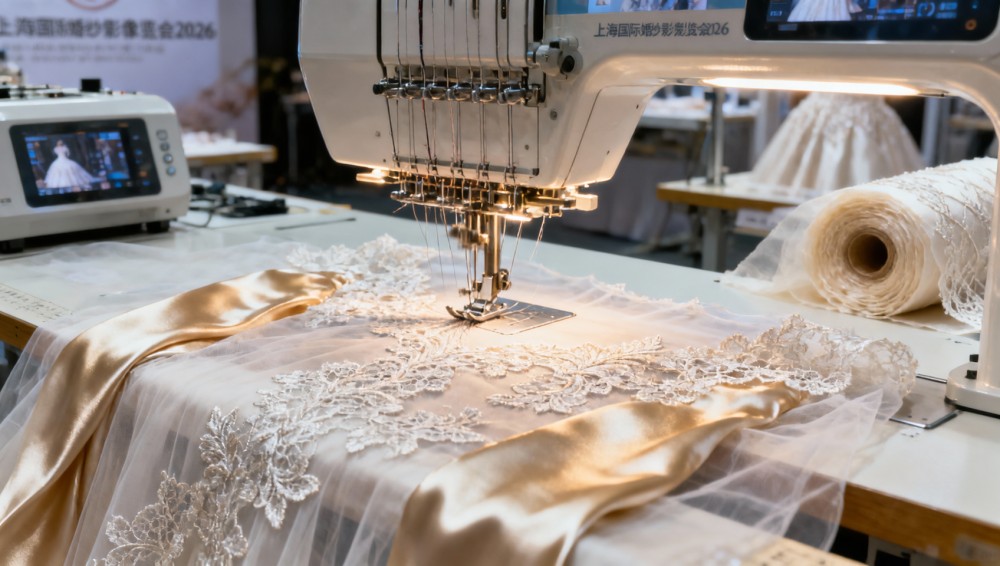
On May 29, 2026, the Organizing Committee of the Shanghai International Bridal Imaging Expo confirmed that the 2026 edition — to be held September 1–3, 2026 — will expand its scope with a newly established ‘Textile Machinery & Fabric Tech’ technology对接 zone. The zone will showcase intelligent embroidery machines, digital direct-to-fabric inkjet printing systems, and production lines for high-elasticity composite fabrics specifically engineered for bridal wear. Pre-registration is open to procurement delegations from Southeast Asia and the Middle East.
Industries Affected by This Development
Garment OEMs and Contract Manufacturers
These manufacturers may face increased expectations from bridal brands seeking localized or nearshored access to integrated digital decoration and specialty fabric capabilities. Impact includes pressure to upgrade finishing lines or co-locate with textile tech providers to meet tighter design-to-delivery timelines.
Technical Fabric Suppliers
Suppliers of performance-oriented bridal textiles — especially those developing stretch-composite, low-shrinkage, or digitally printable base fabrics — now gain a targeted platform to demonstrate application-specific functionality. The zone creates a rare opportunity to align material innovation directly with end-product aesthetics and production workflows.
Digital Printing Equipment Distributors and Integrators
Companies offering digital direct-to-fabric (DTF) or roll-to-roll inkjet systems may see heightened interest from bridal-focused converters. The focus on ‘bridal-specific’ high-elasticity substrates implies demand for print durability, wash-fastness, and dimensional stability under tension — criteria distinct from general apparel or home textile applications.
Sourcing Agents and Cross-Border Procurement Firms
Firms supporting buyers from Southeast Asia and the Middle East must now assess whether their existing supplier networks include verified capabilities in smart embroidery, digital textile printing, or specialty bridal fabric conversion. The pre-registration pathway suggests growing emphasis on vetted, interoperable technology partnerships — not just price or MOQ terms.
What Relevant Companies or Practitioners Should Monitor and Do Now
Track official registration requirements and buyer profile disclosures
The Organizing Committee has opened pre-registration for regional procurement delegations, but full eligibility criteria, minimum order thresholds, and technical verification protocols for exhibitors have not yet been published. Companies intending to engage should monitor updates through official channels before mid-July 2026.
Verify compatibility of current production assets with bridal-specific fabric and decoration workflows
Intelligent embroidery and digital direct-to-fabric printing are not drop-in replacements for conventional systems. Current users should assess whether their machines support high-stretch substrates, low-tension feeding, and color fidelity across satin, tulle, and lace composites — all highlighted as priority use cases.
Distinguish between demonstration intent and commercial readiness
This zone functions primarily as a technology matching platform, not a wholesale trade floor. Analysis shows that most showcased equipment and materials will require post-event validation — including substrate testing, sample turnaround time assessment, and local service availability — before operational adoption.
Prepare technical documentation aligned with cross-border procurement priorities
Buyers from Southeast Asia and the Middle East often prioritize certifications (e.g., OEKO-TEX Standard 100), multilingual operation manuals, and modular maintenance kits. Suppliers preparing for engagement should compile these materials in advance — rather than relying solely on live demonstrations.
Editorial Perspective / Industry Observation
Observably, this initiative reflects a structural shift: bridal imaging exhibitions are no longer solely about photography, styling, or retail presentation — they are becoming convergence points for upstream textile engineering and downstream brand execution. It is better understood as an early signal of vertical alignment within the bridal value chain, rather than evidence of immediate market saturation or widespread adoption. The inclusion of regional pre-registration underscores growing procurement decentralization — but actual transaction volume remains contingent on post-show technical validation and logistics feasibility. Continued monitoring is warranted, particularly around how many registered buyers ultimately attend and what proportion engage in follow-up technical audits.
Conclusion: This announcement marks a deliberate expansion of scope — not a standalone market event. Its significance lies less in immediate sales impact and more in its indication of tightening linkages between digital textile manufacturing and bridal product development. For industry participants, it is more appropriately interpreted as a calibration point: a chance to audit current capabilities against emerging technical benchmarks and regional sourcing expectations — not as a trigger for broad strategic pivots.
Information Source: Official announcement issued by the Shanghai International Bridal Imaging Expo Organizing Committee on May 29, 2026. Note: Buyer attendance rates, exhibitor qualification details, and post-event partnership outcomes remain unconfirmed and subject to ongoing observation.
Recommended News
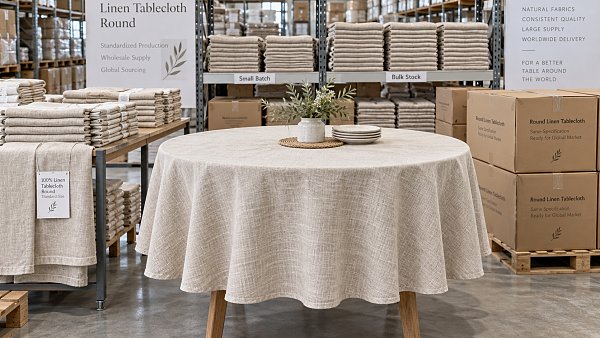
 Home DecorHow order size affects wholesale prices for round linen tableclothsBuying round linen tablecloths wholesale? Discover how order size, freight, and inventory costs affect pricing—and choose the right quantity to maximize real savings.Interior Sourcing LeadOct 14, 2026
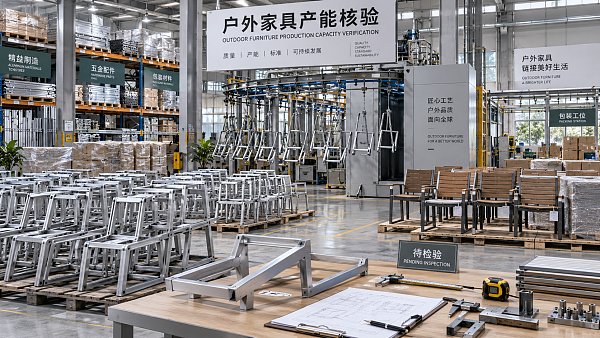
 Outdoor FurnitureHow to verify outdoor furniture manufacturers' production capacityCan outdoor furniture manufacturers deliver on time? Learn how to verify production capacity, uncover bottlenecks, and validate supplier commitments before placing your next order.Interior Sourcing LeadOct 13, 2026
 Commercial DisplaysWhat makes an outdoor digital signage display manufacturer reliable?Discover how to choose a reliable outdoor digital signage display manufacturer with proven weather protection, quality control, smart visibility, and responsive after-sales support.Commercial Tech EditorOct 12, 2026
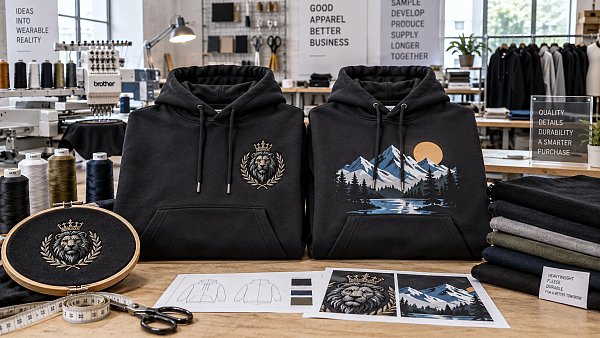
 Garment MfgWhen do bulk embroidered hoodies offer better value than printed ones?Bulk embroidered hoodies deliver lasting value for uniforms and premium branding. Compare durability, design, comfort, and cost to choose the right decoration.Textile Industry AnalystOct 11, 2026